
Everything EMS Teams, Hospitals & Rescue Services in Sri Lanka Need to Know
🏥 For EMS | Hospitals | Fire & Rescue | Sports Medicine | Industrial Safety | Defense
Meta Description: Discover everything about spine boards — from features and materials to top product picks for EMS, hospitals, and rescue teams in Sri Lanka.
When Every Second Counts: Why a Spine Board Can Save a Life
Picture this: a road accident just happened on the Southern Expressway. Someone is lying on the ground, conscious but unable to move. The first responders arrive. What’s the one piece of equipment that could mean the difference between a full recovery and permanent paralysis?
That’s right — a spine board.
If you work in emergency medical services, a hospital, fire & rescue, or even sports medicine here in Sri Lanka, you’ve probably heard the term. But do you really know what makes a great spine board? How to use one properly? What the best options on the market are?
I’m going to break it all down for you — no fluff, just the real stuff. By the time you reach the end of this guide, you’ll know exactly what to look for, how to use it, and which spine boards are genuinely worth your money.
Let’s get into it.
What Is a Spine Board and Why Is It So Important?
A spine board — also called a backboard, long spine board, spinal board, or trauma backboard — is a rigid, flat device used to immobilize a patient’s spine during emergency situations. It’s one of the most fundamental pieces of equipment in any EMS kit, hospital trauma bay, or rescue vehicle.
The whole point of a spine board is simple: when there’s any chance of a spinal injury, you do not move the patient without proper immobilization. A wrong move could turn a treatable injury into permanent paralysis. That’s why spine immobilization boards are non-negotiable in trauma care.
In Sri Lanka, where road accidents, sports injuries, industrial incidents, and natural disasters are real concerns, having the right EMS backboard on hand isn’t optional — it’s essential.
What Makes a Good Spine Board? Key Features to Look For
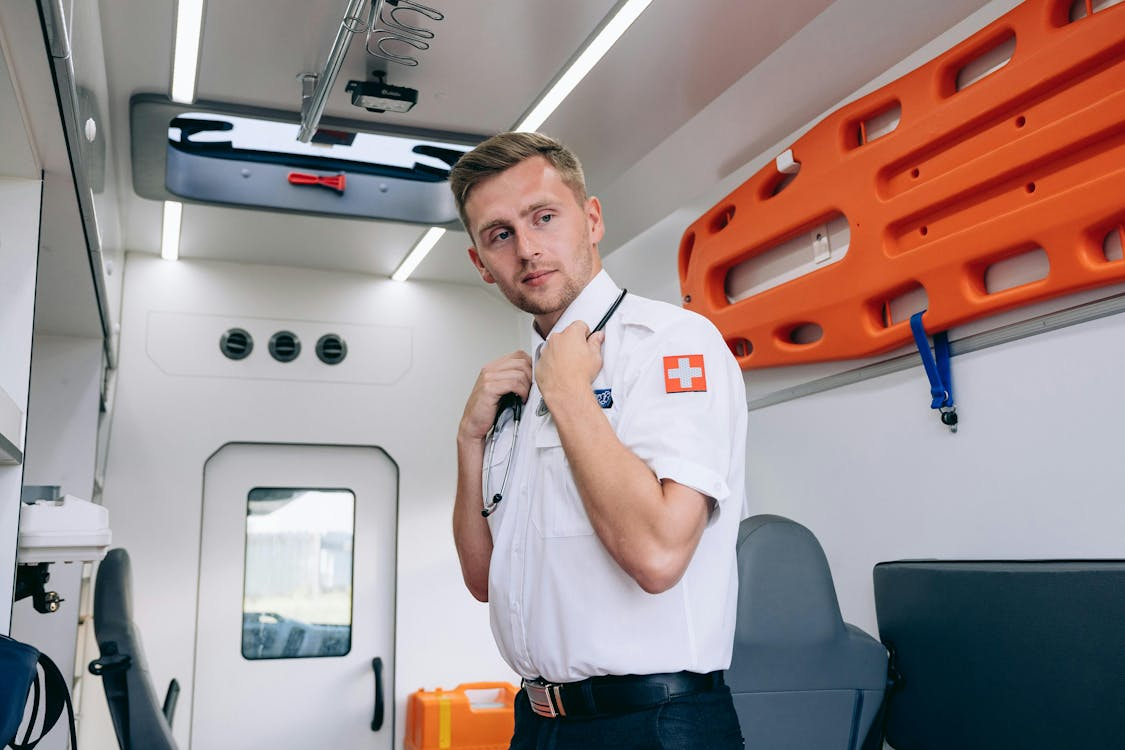
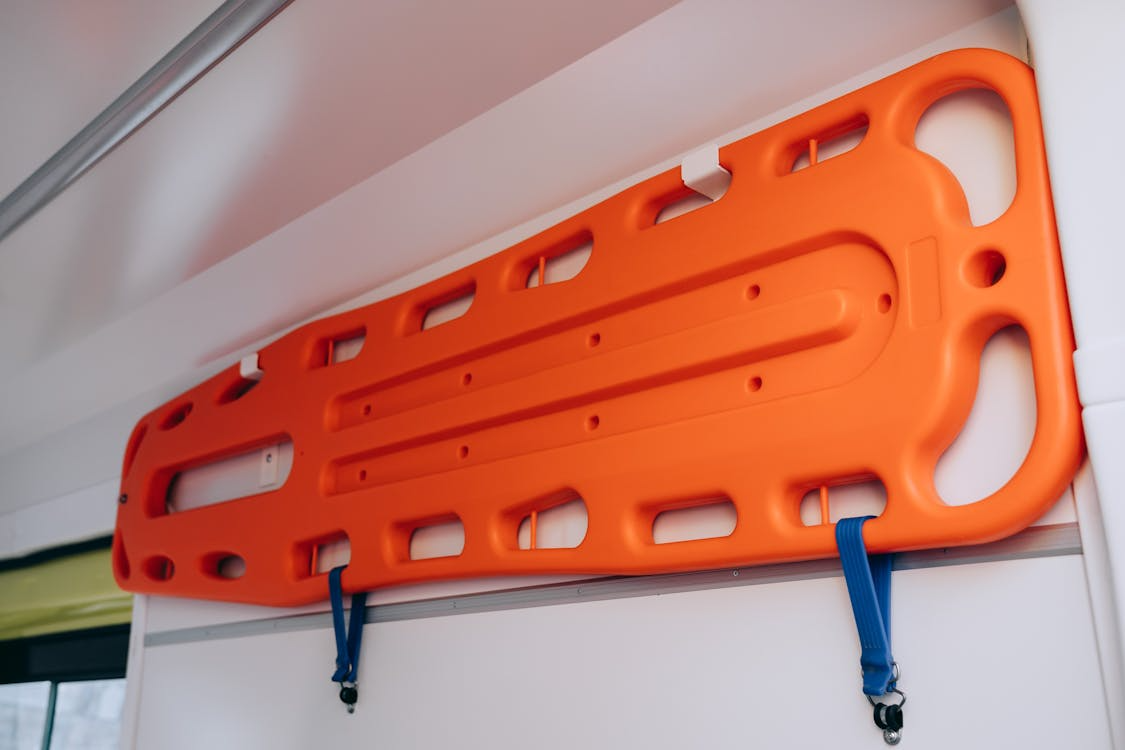
Not all spine boards are created equal. Here’s what separates a great rigid backboard from a mediocre one:
- Sturdy yet lightweight construction — You need a board that won’t break under pressure but also won’t weigh your team down.
- Multiple handles — Side and end handles allow teams of 2–4 responders to safely move a patient.
- Strap slots / speed pins — Evenly spaced slots for securing patient straps quickly and reliably.
- X-ray translucency / radiolucency — The board shouldn’t block imaging; this saves precious time in trauma assessment.
- Easy-to-clean surface — Smooth surfaces that resist fluids and can be disinfected between uses.
- High weight capacity — A quality heavy-duty spine board typically holds between 136–272 kg (300–600 lbs).
- Buoyancy (for water rescue models) — Foam-filled spine boards float, making them essential for aquatic emergencies.
- Color coding — Bright colors (yellow, orange) improve visibility in chaotic rescue environments.
What Materials Are Spine Boards Made From?
The material of a spine board directly affects its weight, durability, and performance in the field. Here’s a quick look:
- High-Density Polyethylene (HDPE) — The most common material. Extremely durable, easy to clean, and cost-effective.
- Fiberglass / Composite — Lighter than plastic, often used in premium models. Excellent for radiolucent spine boards.
- Aluminum — Offers a high strength-to-weight ratio. Great for bariatric spine boards needing extra load capacity.
- Foam-filled HDPE — Standard plastic shell with foam core for buoyancy. Perfect for water rescue spine boards.
- Carbon fiber — Ultra-lightweight and fully radiolucent. Found in high-end trauma center boards.
The Role of Speed Clip Pins in a Spine Board
Here’s something that doesn’t get talked about enough: speed clip pins.
Traditional strap systems require buckles that can be fiddly and slow — and in an emergency, every second counts. Speed clip pins (also called speed pins or pin-lock straps) allow responders to secure a patient to the EMS spine immobilization board in a fraction of the time.
The Hartwell Medical Speed Pins Spine Board is a prime example — it combines foam-filled buoyancy with a fast-deploy strap system, making it a favourite among water rescue teams and EMS crews alike.
If your team operates in high-pressure, time-critical environments — and whose doesn’t? — look for a spine board that features speed clip technology. It’s a small detail with a massive impact.
How to Use a Spine Board for Patient Immobilization
📸 [Insert image: Step-by-step illustration of paramedics properly securing a patient to a spine board]
Using a spine board correctly is just as important as having one. Here’s a simplified step-by-step:
- Assess the scene and patient — Ensure scene safety. Evaluate the patient for suspected spinal injury (MOI, pain, weakness).
- Manual in-line stabilization — One responder holds the patient’s head and neck in a neutral position throughout the entire process.
- Apply a cervical collar — A rigid cervical collar is placed before boarding to further stabilize the cervical spine.
- Log-roll the patient — With one or more team members, gently roll the patient onto the spine board while maintaining spinal alignment.
- Position the patient — Center the patient on the board. Head should align with the top section.
- Secure with straps — Use chest, hip, and leg straps through the strap slots. If using a speed pin system, engage the pins firmly.
- Add head immobilizer — A head block or foam head immobilizer is placed on both sides of the skull and secured.
- Final check — Ensure all straps are snug (not circulation-restricting). Reassess the patient’s neurological status.
- Transport — Carry the patient using the perimeter handles. Keep the board horizontal and movement controlled.
Pro tip: Always have at least 3 trained responders when performing a log-roll. Two manages the body, one holds the head.
Are Spine Boards X-Ray Compatible?
Yes — and this is a feature you should actively look for. A radiolucent spine board (also called an X-ray translucent spine board) allows medical imaging to pass through the board without interference.
This means the patient can be imaged without being transferred off the board, which is critical in trauma cases where unnecessary movement could worsen a spinal injury.
Models like the MOBI 6F Spine Board and the Ferno Spine Board are popular in hospital trauma settings precisely because they’re MRI and CT compatible as well — giving medical teams full imaging flexibility from field to ER.
Spine Board vs. Scoop Stretcher — What’s the Difference?
People mix these up all the time. Let me clear it up with a quick comparison:
| Feature | Spine Board | Scoop Stretcher |
| Purpose | Full-body spinal immobilization | Patient extraction & transfer |
| Shape | Flat, rigid board | Two interlocking halves (scoop shape) |
| Best Use | Transport, trauma scenes | Picking up patients from ground |
| X-ray Compatible | Usually yes | Usually yes |
| Water Rescue | Some models (foam-filled) | Not typically |
| Pediatric Option | Yes | Yes (adjustable models) |
| Weight Capacity | 136–272 kg (300–600 lbs) | 136–227 kg (300–500 lbs) |
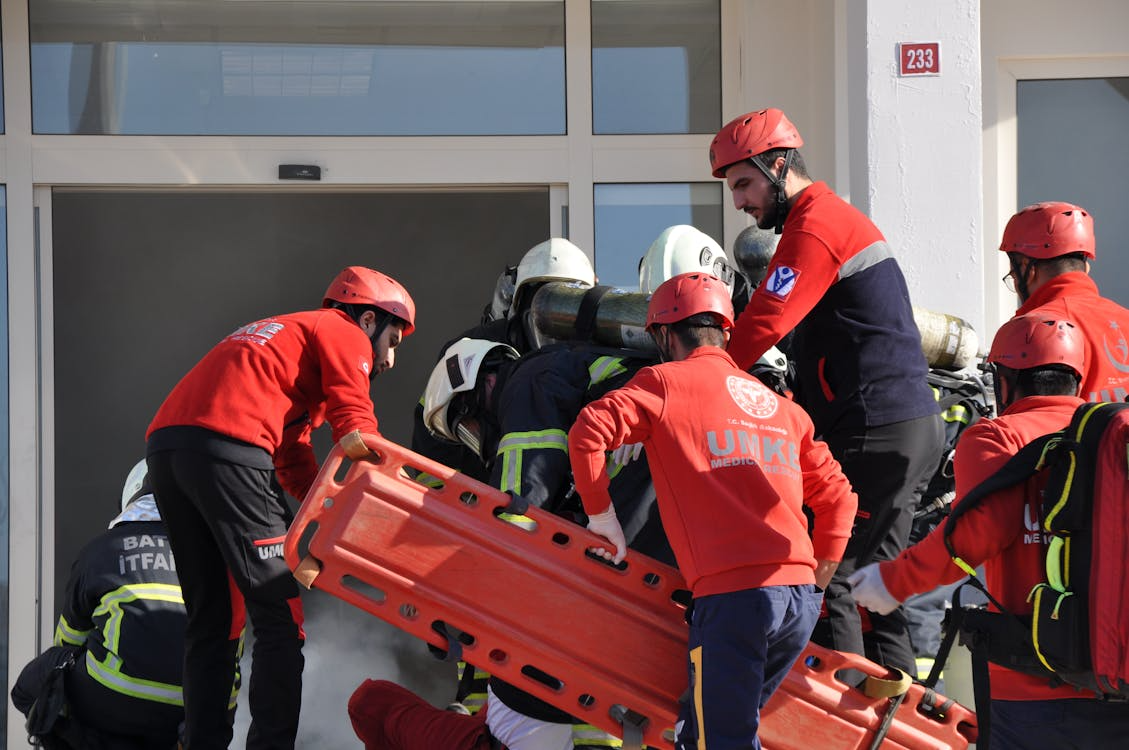
In short: use a spine board for immobilization and transport. Use a scoop stretcher to lift a patient off the ground with minimal movement. They’re complementary tools — many well-equipped EMS teams carry both.
How Much Weight Can a Spine Board Hold?
This varies by model, but here’s a general guide:
- Standard adult spine board: 136–181 kg (300–400 lbs)
- Heavy-duty spine board: 181–272 kg (400–600 lbs)
- Bariatric spine board: 272 kg+ (600 lbs+)
- Pediatric spine board: Designed for children, typically rated 70–100 kg
For teams working in environments where bariatric patients are a possibility — hospitals, industrial sites — investing in a heavy-duty or bariatric model is a smart call.
Can Spine Boards Be Used for Water Rescue?
Absolutely — but not just any spine board. You need a specifically designed water rescue spine board. These boards are:
- Foam-filled for buoyancy — they float even with a patient strapped on
- Made from bright yellow or orange plastic for high visibility in aquatic environments
- Resistant to salt water and pool chemicals
- Equipped with extra strap slots for securing the patient against wave movement
The Water-Jel Spine Board and the Skedco Curapode Spine Board are top choices for water rescue operations. If your team serves coastal areas, rivers, or recreational water facilities here in Sri Lanka, these are worth serious consideration.
Are There Pediatric Spine Boards Available?
Yes, and they matter more than people think. A standard adult spine board is too large for a child — the patient’s head may not align properly with the cervical support area, and straps won’t secure effectively.
The MOBI Pediatric Spine Board is purpose-built for younger patients. It features:
- X-ray translucent design
- Smaller dimensions for accurate immobilization
- Compatible head immobilizer blocks for paediatric head size
- Color-coded strap slots for quick identification during high-stress situations
For hospitals with A&E departments, ambulance services, and sports organizations working with youth athletes, having a dedicated pediatric spine board is non-negotiable.
How Do You Clean and Maintain a Spine Board?
Maintaining your EMS backboard properly extends its life and ensures patient safety. Here’s what to do:
- After each use — Wipe down with a hospital-grade disinfectant. Avoid abrasive scrubbers that can scratch the surface.
- Inspect straps — Check for fraying, cracking, or weakened buckles. Replace straps that show wear.
- Check pins and slots — Speed clip pins should engage and release cleanly. Clogged slots should be cleared.
- Storage — Store flat or in a dedicated rack. Avoid prolonged exposure to direct sunlight (UV degrades plastic over time).
- Annual inspection — Conduct a formal inspection annually, especially for boards used in water rescue (check for waterlogging in foam-filled models).
Most modern spine boards are designed for durability — models like the Hartwell Tracker II with its rotational-molded shell and graphite reinforcements are built to last years with proper care.
What Accessories Pair with a Spine Board?
A spine board is most effective when used as part of a complete immobilization system. Key accessories include:
- Cervical collars (rigid / adjustable) — First step in spinal stabilization
- Head immobilizer blocks — Foam or rigid blocks that secure the skull from lateral movement
- Spine board straps — 3-piece or 9-piece strap kits with speed clips for full-body securement
- Spider straps — Multi-point quick-attach systems used in advanced rescue operations
- Spine board carrier / bag — Protects the board during transport and storage
- Gloves & PPE — Always used when handling a trauma patient
- Rescue helmet (for the patient) — Used in vehicle extraction scenarios
Top Spine Board Products to Consider in 2025
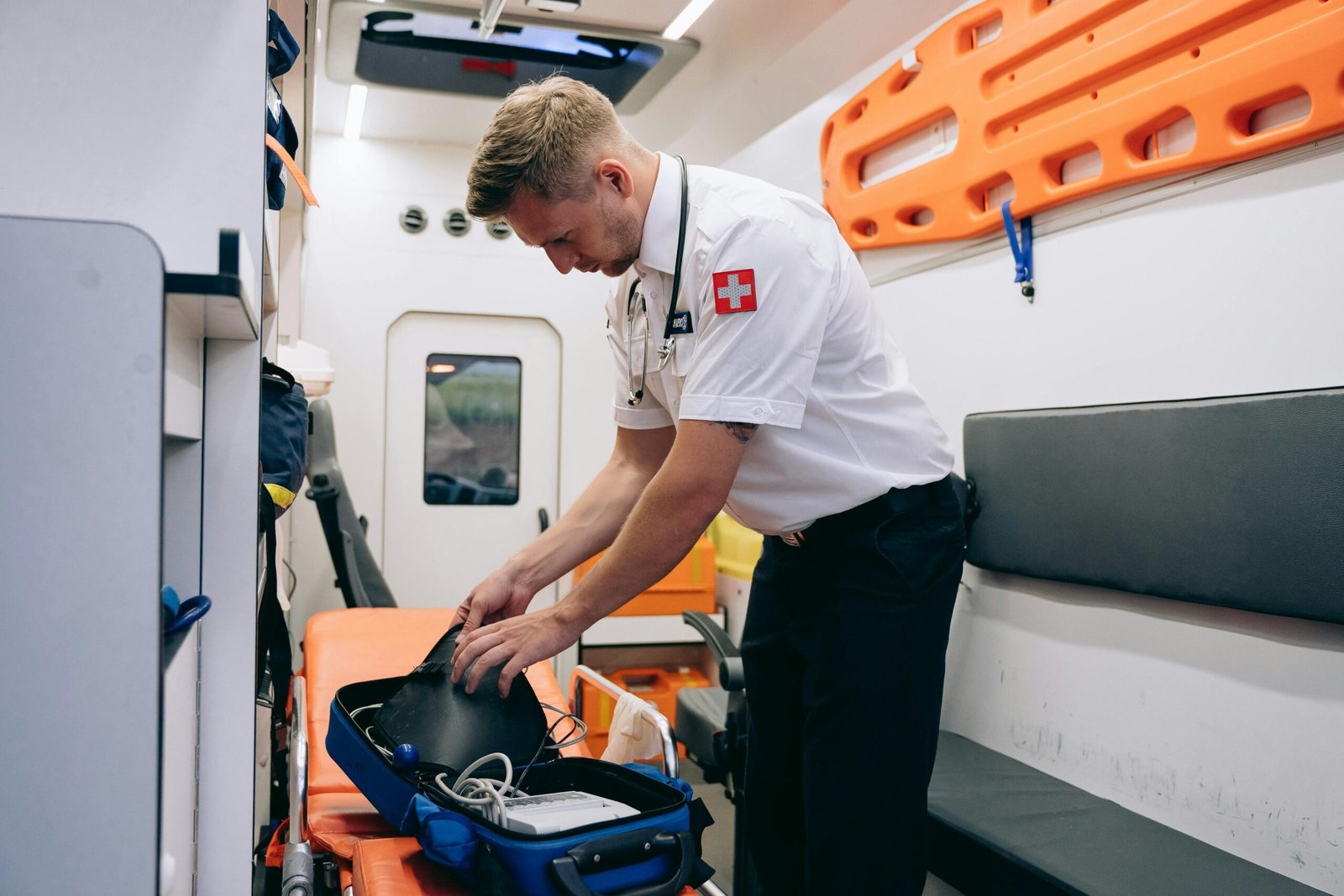
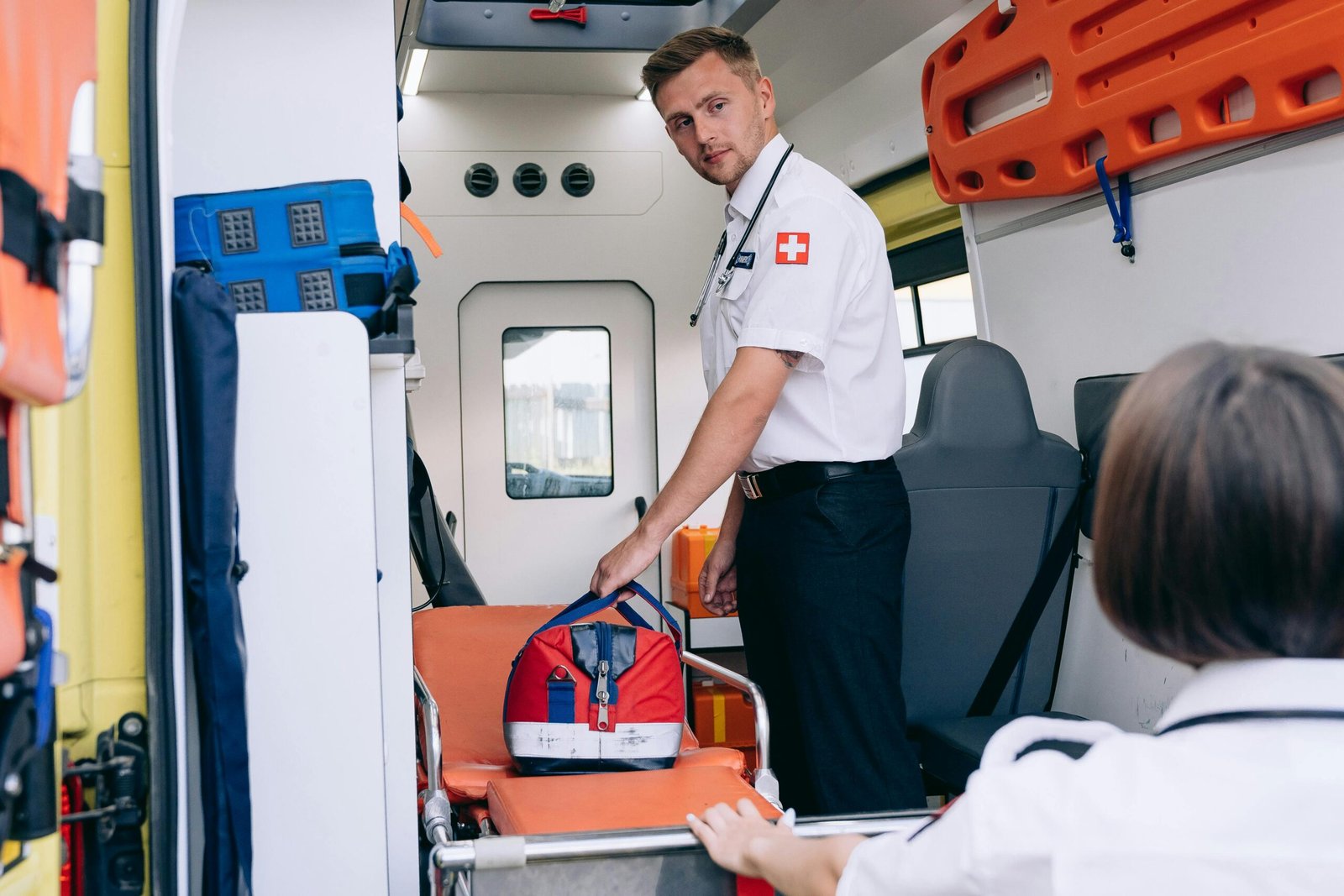
Whether you’re equipping a single ambulance unit or an entire hospital trauma department, here’s a curated list of spine board options worth knowing about:
| Product | Source | Key Feature |
| EMS XTRM Spine Board Stretcher | emsxtrm.com | Heavy-duty, lightweight, easy-to-clean — ideal for EMS teams. |
| MOBI 6F Spine Board | medical-stretchers.com | Durable, X-ray compatible, MRI/CT safe; latex-free. |
| Pediatric Spine Board (MOBI) | medical-stretchers.com | X-ray translucent; includes straps & head immobilizer for kids. |
| MOBI Pro Oversized White Slider Board | medical-stretchers.com | Lightweight, smooth surface, thin profile for easy storage. |
| Hartwell Medical Speed Pins Spine Board | hartwell.com | Speed clip pins for fast fastening; foam-filled for buoyancy. |
| Ferno Spine Board | boundtree.com | Professional-grade, X-ray translucent for trauma extrication. |
| Laerdal Backboard | boundtree.com | Standard EMS model; rigid support with multiple strap points. |
| Water-Jel Spine Board | ems sites | Buoyant, foam-filled yellow board for aquatic emergencies. |
| Skedco Curapode Spine Board | ems suppliers | Lightweight composite for water rescue; folds for portability. |
| Jiekang EMS Spine Board | jiekangrescue.com | Compliant, durable for emergency spinal support & safe transport. |
Note: Always verify product specifications and certifications with your supplier before procurement. Ensure compliance with Sri Lanka’s Ministry of Health equipment standards.
Frequently Asked Questions About Spine Boards
Let’s tackle the most common questions directly:
❓ What is a spine board and why is it important in emergency rescue?
A spine board is a rigid, flat device used to immobilize a patient’s spine after a suspected spinal injury. It’s critical in emergency rescue because any uncontrolled movement of the spine after trauma can cause additional nerve damage — potentially turning a recoverable injury into permanent paralysis.
❓ What materials are spine boards typically made from?
Most spine boards are made from high-density polyethylene (HDPE), fiberglass, composite materials, or aluminum. Premium models may use carbon fiber for maximum weight reduction and radiolucency. Foam-filled models use HDPE with an internal foam core for buoyancy.
❓ Are spine boards X-ray compatible?
Many modern spine boards are X-ray translucent (radiolucent), meaning imaging can be performed without removing the patient from the board. Models like the MOBI 6F and Ferno Spine Board are also MRI and CT compatible — a huge advantage in hospital trauma settings.
❓ How much weight can a spine board typically hold?
Standard models hold 136–181 kg (300–400 lbs), heavy-duty boards up to 272 kg (600 lbs), and bariatric models exceed that. Always check the manufacturer’s rated load capacity before field deployment.
❓ What is the difference between a spine board and a scoop stretcher?
A spine board is a flat rigid board used for immobilization and transport. A scoop stretcher has two interlocking halves that slide under a patient from both sides, allowing lifting with minimal movement. They serve complementary roles — many EMS systems carry both.
❓ Can spine boards be used for water rescue?
Yes, but only models specifically designed for water rescue. These are foam-filled for buoyancy, brightly colored for visibility, and corrosion-resistant. Examples include the Water-Jel Spine Board and Skedco Curapode.
❓ What is the role of speed clip pins in a spine board?
Speed clip pins allow responders to secure patients much faster than traditional buckle straps. They click and lock in seconds, critical in time-sensitive trauma scenarios. The Hartwell Medical Speed Pins Spine Board is a well-known example of this technology.
❓ Are there pediatric spine boards available?
Yes. Pediatric spine boards are sized specifically for children, with appropriate strap slots, compatible head immobilizers, and X-ray translucent materials. The MOBI Pediatric Spine Board is a widely used option.
❓ How do you clean and maintain a spine board?
Wipe with hospital-grade disinfectant after each use, inspect straps and pins regularly, store flat away from UV exposure, and conduct an annual formal inspection. Proper maintenance significantly extends the board’s service life.
❓ What accessories pair with a spine board?
Essential accessories include cervical collars, head immobilizer blocks, speed-clip straps or spider straps, spine board carry bags, and appropriate PPE. Together these form a complete patient immobilization system.
Final Thoughts: Getting Spine Boards Right in Sri Lanka
📸 [Insert image: EMS team in Sri Lanka training with spine boards and immobilization equipment]
Here’s the honest truth: in emergency medicine, rescue operations, and trauma care, the spine board is one of those deceptively simple tools that carries enormous responsibility.
The right spine board — properly chosen, correctly used, and well-maintained — can genuinely save lives and prevent life-altering disability. The wrong choice, or worse, no choice at all, can cost someone their mobility forever.
Whether you’re running an ambulance fleet, equipping a hospital trauma unit, outfitting a fire station, or managing safety for a construction team in Sri Lanka, I hope this guide has given you a clearer picture of what to look for.
Here’s a quick recap of what matters most:
- Choose a board with the right material for your environment (standard, water rescue, or bariatric)
- Always verify X-ray / radiolucent compatibility if hospital use is involved
- Look for speed clip pins for faster patient securement
- Don’t overlook pediatric spine boards if your team serves children
- Pair your board with the right accessories — collar, head blocks, straps
- Maintain and inspect regularly; a damaged board is a liability, not an asset
Have questions about sourcing spine boards in Sri Lanka, or want to share your experience with a particular model? Drop a comment or reach out — I’d love to hear from fellow EMS professionals and rescue teams.
🚑 Stay prepared. Stay trained. Save lives. 🚑
Keywords: spine board, backboard, long spine board, EMS backboard, spinal board, spine immobilization board, rigid backboard, trauma backboard, radiolucent spine board, pediatric spine board, water rescue spine board, bariatric spine board, foam filled spine board, heavy duty spine board, spine board straps, spine board Sri Lanka