
Anyone who has ever tried to move a bedridden or mobility-limited patient without the right equipment knows the truth immediately: good intentions are not enough. A wrong grip, an awkward angle, a moment of hesitation — and what should have been a routine transfer turns into a risk for everyone involved. That’s precisely the gap an electric patient hoist is built to close.
Whether you’re outfitting an ICU, managing a rehabilitation centre, or supporting a loved one’s care at home, the right patient lift changes the entire rhythm of the day. It’s not just about moving someone from bed to chair — it’s about doing so with dignity, consistency, and confidence, transfer after transfer, shift after shift.
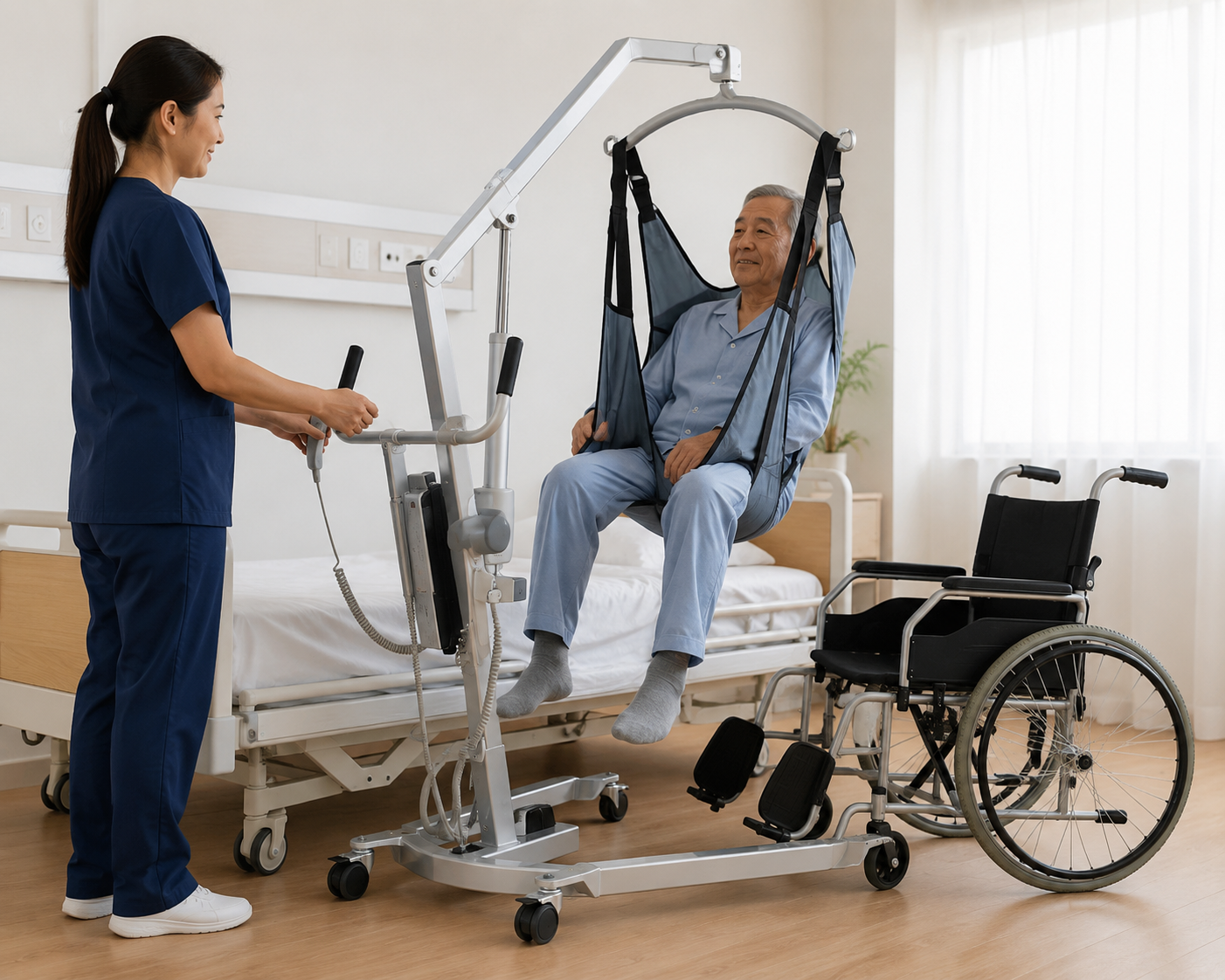
This guide breaks down exactly what to look for in an electric patient lift, compares leading models, and answers the questions procurement officers, nurses, and family caregivers ask most often before making a purchase.
What Is an Electric Hoist for Patients?
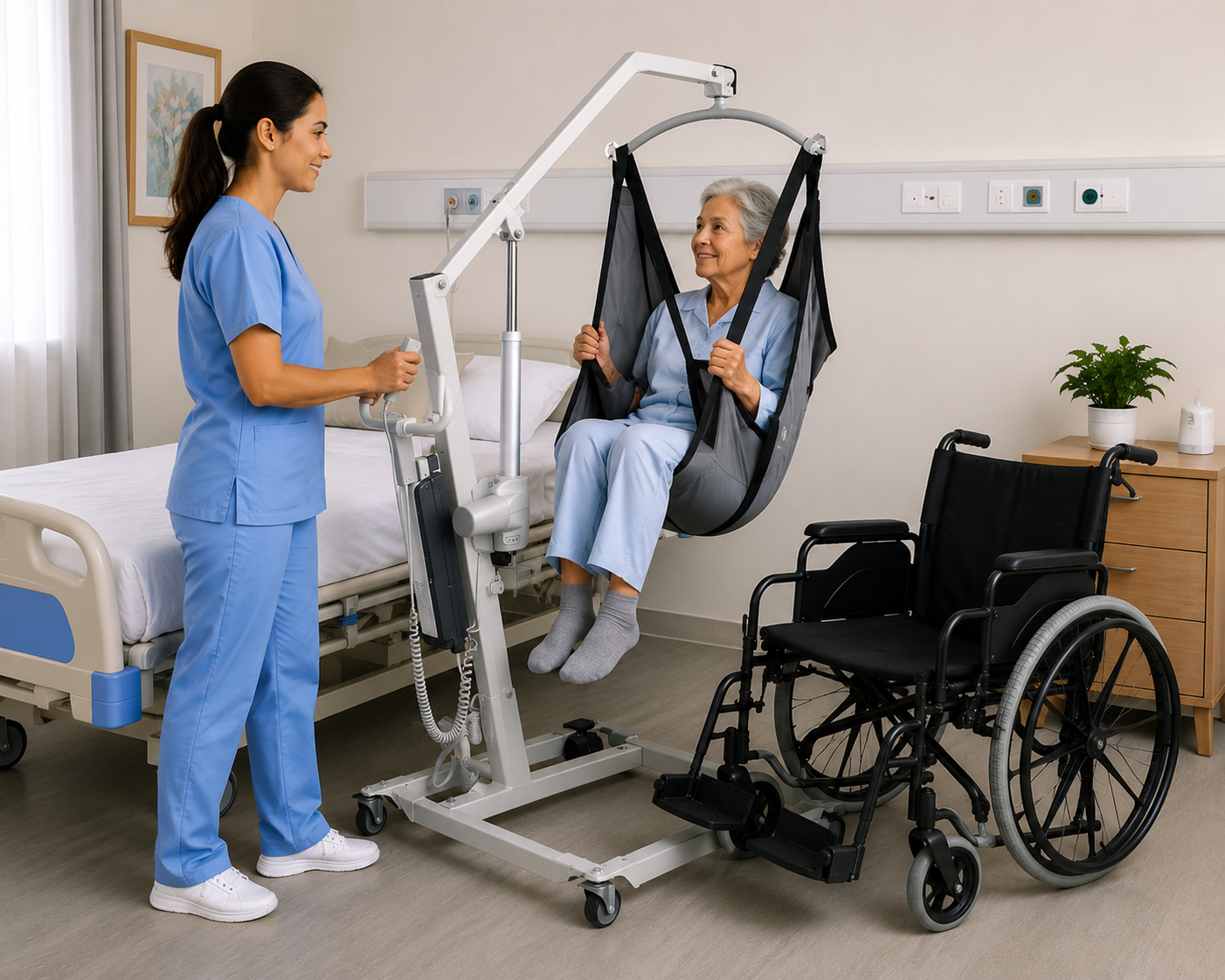
An electric hoist for patients is a mechanized lifting device that uses a battery-powered actuator, rather than manual pumping, to raise and lower a sling-supported patient. It replaces the physical strain of manual patient lifting equipment with the push of a button, making transfers smoother, more predictable, and far less taxing on caregivers’ backs and shoulders.
Most units fall into two broad categories:
- Mobile patient hoists — wheeled, freestanding units that can move between rooms
- Ceiling patient hoists — track-mounted systems fixed to a room’s ceiling, ideal for repeat transfers in the same space
Both achieve the same goal — safe vertical and lateral movement of a patient — but they suit different environments, which we’ll unpack below.
How Does a Patient Electric Hoist Work?
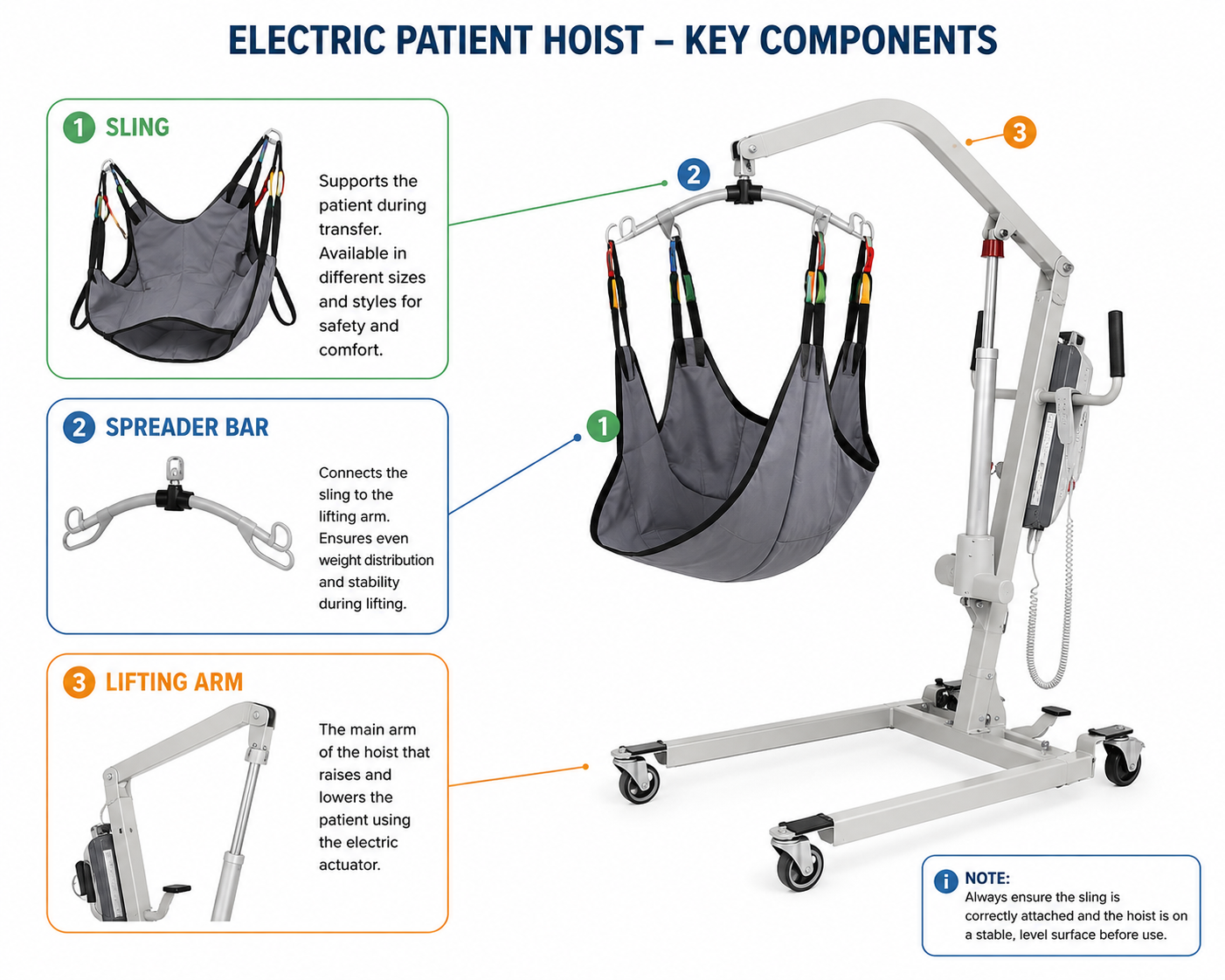
The mechanics are refreshingly simple. A sling is fitted around the patient’s body, its loops or clips attached to a spreader bar. The spreader bar connects to the hoist’s lifting arm, which is raised or lowered via an electric actuator controlled by a handset. The caregiver guides the base or track while the motor does the heavy lifting — literally.
Higher-end models add smart monitoring, which tracks lift cycles, battery health, and sometimes even approximate patient weight, feeding data back for maintenance and care planning purposes.
Electric vs. Manual: Why Go Electric?
| Factor | Electric Hoist | Manual (Hydraulic) Hoist |
|---|---|---|
| Physical effort | Minimal — button-operated | Requires repeated pumping |
| Transfer speed | Fast, consistent | Slower, effort-dependent |
| Caregiver fatigue risk | Low | Higher over multiple transfers |
| Upfront cost | Higher | Lower |
| Best for | High-frequency transfers, heavier patients | Occasional use, tighter budgets |
For facilities handling multiple transfers per shift — ICUs, rehabilitation wards, geriatric care homes — the efficiency gains of an electric or battery-operated patient hoist typically justify the higher upfront cost within the first year of use.
Key Factors to Consider Before Buying
1. Weight Limit (Safe Working Load)
This is the single most important spec. Choosing the wrong weight limit isn’t a minor oversight — it’s a safety failure waiting to happen. Match the hoist’s SWL (safe working load) to your heaviest anticipated patient, then build in a margin. Facilities serving bariatric patients should look toward the 200kg+ range rather than standard 155–180kg units.
2. Mobile vs. Ceiling Hoist
- Mobile hoists offer flexibility across rooms and wards — ideal where patients are transferred in varied locations, or where budget favors one shared unit.
- Ceiling hoists excel in single-room, high-frequency settings (like a patient’s permanent bedroom) since they eliminate the need to maneuver a base around furniture.
3. Sling Compatibility
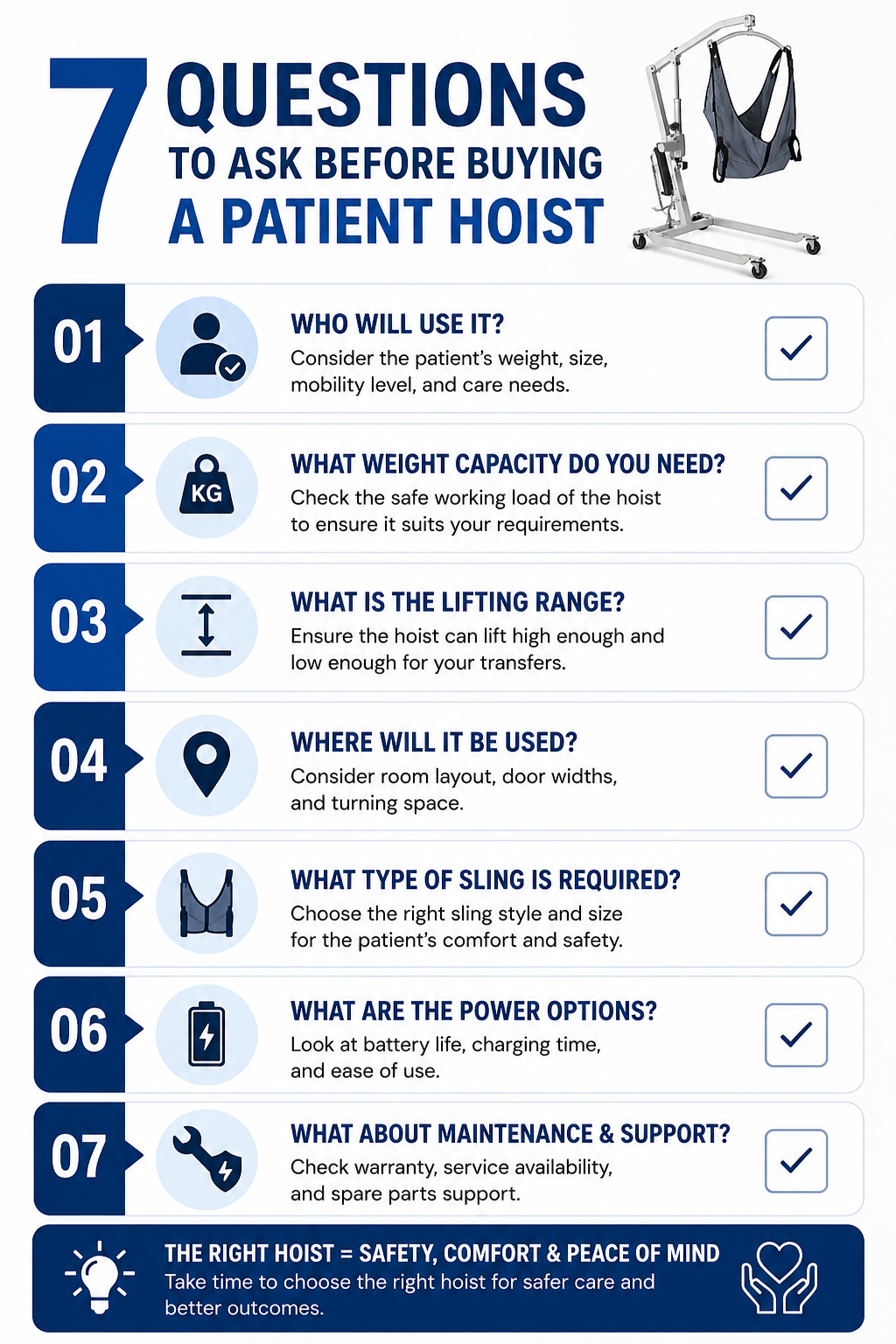
Not every sling fits every hoist. Check spreader bar attachment style (loop vs. clip) and ensure slings are rated for the same weight capacity as the hoist itself. Facilities should stock multiple sling types — full-body, stand-assist, and toileting slings — to match different patient needs.
4. Battery and Power Reliability
A battery-operated patient hoist should hold charge through a full shift and ideally include a low-battery indicator and manual backup release, so a transfer can never be left half-completed due to power loss.
5. Ease of Use and Training Requirements
A hoist’s controls should be intuitive enough that new staff or family caregivers can be trained quickly, without sacrificing precision. Look for clearly labeled up/down controls, emergency stop buttons, and manual lowering mechanisms for power failures.
6. One-Person Operation
Many modern electric patient lifts are engineered for single-caregiver operation, which matters enormously for home healthcare providers and understaffed facilities. Always verify this in the product spec rather than assuming it.
7. Maintenance and Servicing
Regular servicing — generally every 6 to 12 months, or per manufacturer guidance — keeps the actuator, sling attachments, and casters in safe working order. Ask suppliers about local servicing support before purchasing.
Top Electric Patient Hoists Worth Considering
Below is a comparison of well-regarded models across capacity tiers and use cases.
| Product | Type | Capacity | Best For |
|---|---|---|---|
| Birdie Evo Mobile Hoist (Electric Legs, Detachable Battery) | Mobile | 180kg | Flexible, secure transfers across rooms |
| Oxford Midi Basic 180 | Mobile | 180kg | General-purpose everyday transfers |
| Oxford Major 200 (Smart Monitor) | Mobile | 200kg | Demanding transfers with usage tracking |
| Oxford Maxi 180 | Mobile | 180kg | Larger patients, frequent use |
| Oxford Advance | Mobile | 155kg | Compact, standard transfer tasks |
| SLK Eazy-up Standaid (Electric Legs) | Stand-assist | — | Assisted standing and short transfers |
| Birdie Evo Compact Folding Hoist | Mobile | — | Home use, easy storage |
| Samsoft 175 | Mobile | 175kg | Comfortable home and care transfers |
| RiseBasic440M | Ceiling | — | Fixed single-room use |
| Castor Gantry Hoist | Gantry | — | Spaces without ceiling track installation |
| Carina350 | Mobile | 165kg | Folding design, space-conscious wards |
| Oxford Presence | Mobile | 227kg | High-capacity, complex transfers |
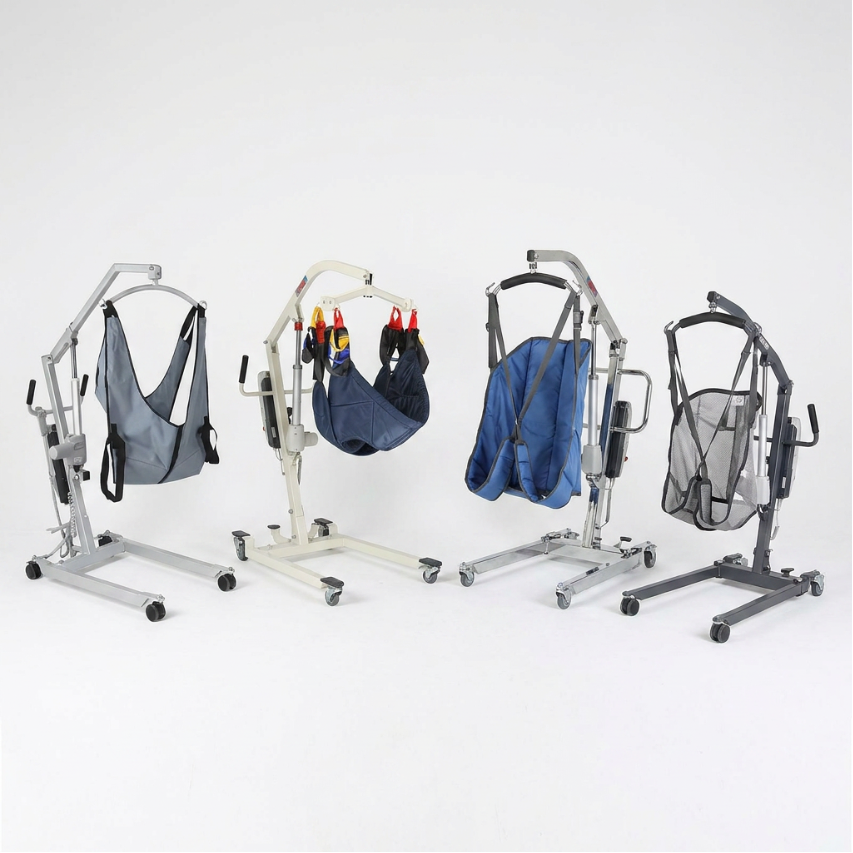
A quick word of caution: always confirm current stock, pricing, and exact specifications directly with the supplier before publishing product links or making a procurement decision — hoist ranges get updated and models are periodically discontinued or replaced.
Home Healthcare vs. Institutional Use
Family caregivers and home healthcare providers generally prioritize compact folding designs, quiet operation, and simple one-person controls. Institutional buyers — hospitals, rehabilitation centres, nursing homes — tend to weigh durability, cycle frequency, and fleet-wide serviceability more heavily, often standardizing on one or two models across a facility to simplify staff training and spare parts stocking.
Safe Patient Transfer: Non-Negotiable Practices
Regardless of hoist model, safe operation depends on people and process as much as equipment:
- Always check the patient’s individual care plan before selecting a sling
- Inspect the sling and hoist for wear before every use
- Never leave a patient unattended while suspended in a raised hoist
- Match hoist and sling weight ratings to the patient — never estimate
- Ensure staff are formally trained before operating any lift independently
Frequently Asked Questions
What is an electric hoist for patients? It’s a battery-powered lifting device that raises and lowers patients via a sling system, replacing manual pumping with motorized control.
How does a patient electric hoist work? A sling attaches to a spreader bar connected to the hoist’s lifting arm, which an electric actuator raises or lowers via handset control.
Is an electric hoist safe for home use? Yes, provided the model is correctly weight-matched to the patient, the caregiver is trained, and the unit is serviced per manufacturer guidance.
What weight limit should I choose for a patient hoist? Choose based on your heaviest anticipated patient plus a safety margin — commonly 155–180kg for standard use, 200kg+ for bariatric care.
What is the difference between a mobile hoist and a ceiling hoist? Mobile hoists move between rooms on wheels; ceiling hoists are track-mounted and fixed to a single space for repeat, obstruction-free transfers.
Which sling is suitable for my patient hoist? Match sling attachment style (loop or clip) and weight rating to your hoist model, and select sling type (full-body, stand-assist, toileting) based on the patient’s mobility level.
Can one person operate an electric patient hoist? Many modern electric hoists are designed for single-caregiver operation, though this should always be confirmed against the specific product’s specifications.
How often should a patient hoist be serviced? Generally every 6 to 12 months, though facilities should follow the manufacturer’s recommended service interval.
What is the best patient hoist for elderly care? There’s no single “best” model — the right choice depends on the patient’s weight, mobility level, and whether transfers happen in one room or across a facility.
Is a battery-operated hoist better than a manual hoist? For frequent transfers, yes — battery-operated hoists reduce caregiver fatigue and speed up transfers, though manual hoists remain a lower-cost option for occasional use.
What features matter most in an electric patient hoist? Weight capacity, sling compatibility, one-person operability, battery reliability, and ease of emergency manual release.
How do I transfer a patient safely using a hoist? Check the care plan, select the correct sling, inspect equipment beforehand, communicate clearly with the patient throughout, and never leave them unattended while suspended.
Final Thoughts
Choosing an electric patient hoist isn’t just a procurement checkbox — it’s a decision that shapes daily safety and dignity for patients and caregivers alike. Start with weight capacity and use-case (mobile vs. ceiling), narrow down by sling compatibility and battery reliability, and always confirm servicing support before committing to a model. Get those fundamentals right, and the rest of the buying decision tends to fall into place.

Ready to buy one? Check out this electric patient hoist, available locally through MS Medicals a straight forward option if you’d rather order from within Sri Lanka than wait on an international shipment.