
Sri Lanka Healthcare Guide · 2026
The Complete Guide to Patient Monitors for Hospitals & Clinics in Sri Lanka
Everything you need to know — from ICU multipara monitors to portable vital signs monitors — so you pick the right device for every ward.
Updated April 20262,100 words For Cardiologists, ICU Teams & Procurement Officers
Let me ask you something. Have you ever walked into a busy ICU in Colombo at 2 a.m. and heard a monitor alarm cut through the silence? That sound — however annoying it gets after the hundredth false alert — might just be the most important sound in modern medicine. A patient monitor is not fancy furniture for your ward. It is the continuous, tireless set of eyes that watches your patient when you simply cannot.
Whether you are equipping a new cardiac care unit in Kandy, upgrading a rural district hospital in Matara, or sourcing portable monitors for an emergency transport team in Galle, this guide is for you. We will walk through what a patient monitor actually does, which parameters matter most, how different types compare, and — critically — which brands are worth your rupees in 2026.
“A patient monitor is not a luxury. In a country where nurse-to-patient ratios can be stretched thin, it is the silent second nurse that never clocks out.”
🏥
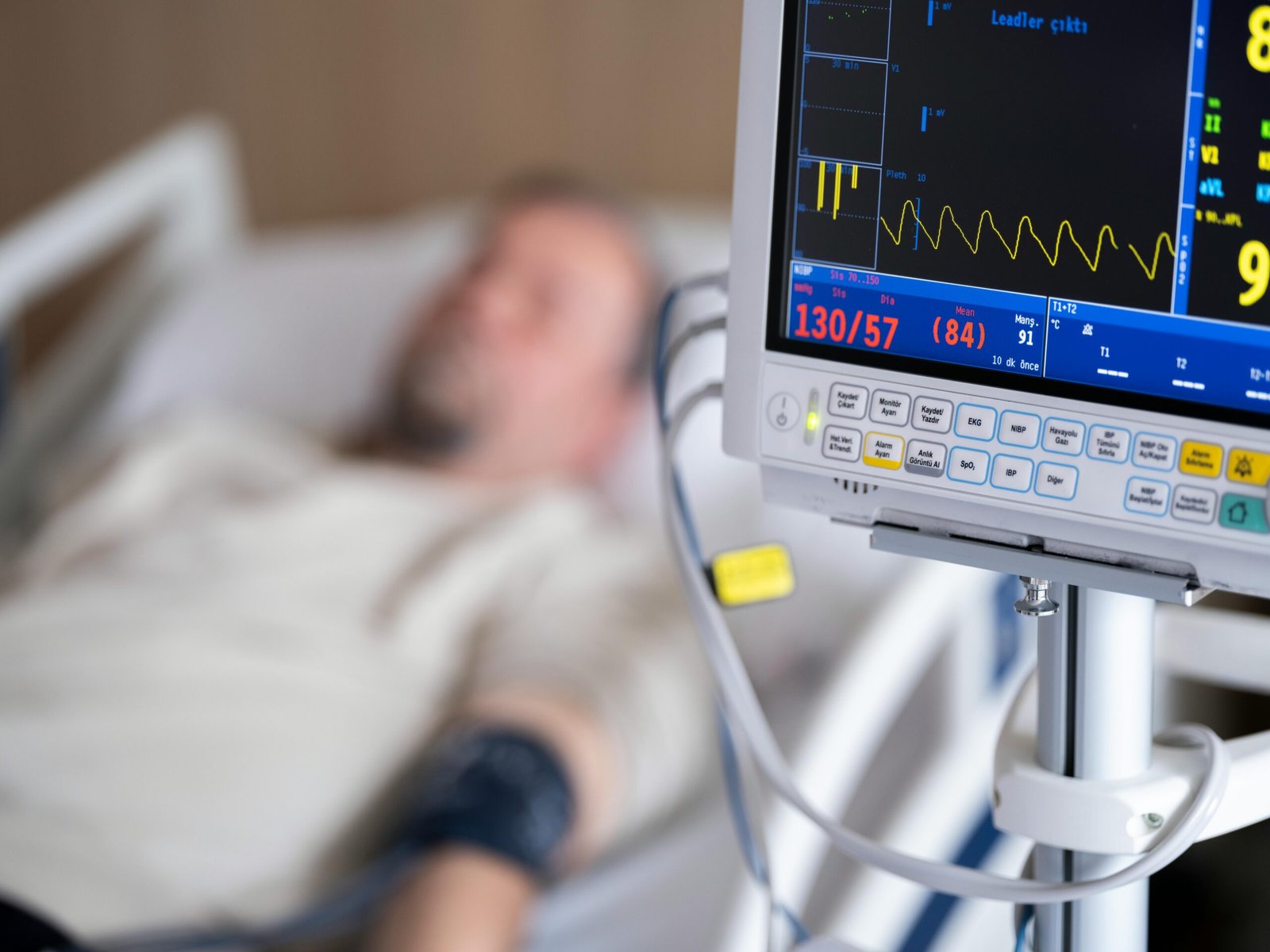
What Is a Patient Monitor — and Why Does It Matter?
Simply put, a patient monitor continuously measures and displays a patient’s vital signs in real time. It tracks the body’s most critical functions — heart rate, blood pressure, oxygen levels, breathing rate, and temperature — and it does this around the clock without needing a nurse to manually check every fifteen minutes.
The moment a reading drifts outside the preset safe range, the monitor fires off an audio-visual alarm. Staff can respond immediately. That is the whole idea: catch deterioration before it becomes a crisis.
In Sri Lanka’s public and private hospitals alike, patient monitors are increasingly central to clinical care. Post-operative wards, ICUs, emergency departments, labour rooms, and even busy outpatient cardiac clinics all benefit from continuous monitoring. The data they generate — trends over hours, not just snapshots — gives clinicians a richer picture than any single manual reading ever could.
Normal Readings on a Patient Monitor
Here is a quick reference for adult patients. These are the baselines your team should know cold:
Heart Rate 60–100 BPM
Blood Pressure 120/80 mmHg
SpO₂ 95–100 %
Resp. Rate 12–20 breaths/min
Temperature 36.5–37.5 °C
Deviations from these ranges are what trigger the alarm system. The monitor’s logic is beautifully simple: set limits, watch continuously, alert when breached. The clinical judgment of what to do next? That is still entirely yours.
What Parameters Does a Patient Monitor Measure?
Not all monitors are equal — and not all wards need the same parameters. Here is a breakdown of what is available and what each one tells you:
| Parameter | What It Measures | Most Critical In |
|---|---|---|
| ECG / Heart Rate | Electrical activity of the heart, rhythm, rate | Cardiology, ICU, CCU |
| SpO₂ (Pulse Oximetry) | Blood oxygen saturation via finger probe | All clinical settings |
| NIBP | Non-invasive blood pressure at set intervals | All clinical settings |
| Respiration Rate (RR) | Breaths per minute via chest impedance | ICU, post-op wards |
| Temperature | Core or surface body temperature | Paediatrics, post-op |
| ETCO₂ | End-tidal CO₂ — ventilation quality | Anaesthesia, ICU |
| IBP | Invasive arterial blood pressure | Critical care, surgery |
| ST Analysis | Ischaemia detection in ECG waveform | Cardiology, CCU |
| Arrhythmia Detection | Auto-recognition of irregular rhythms | Cardiology, ICU |
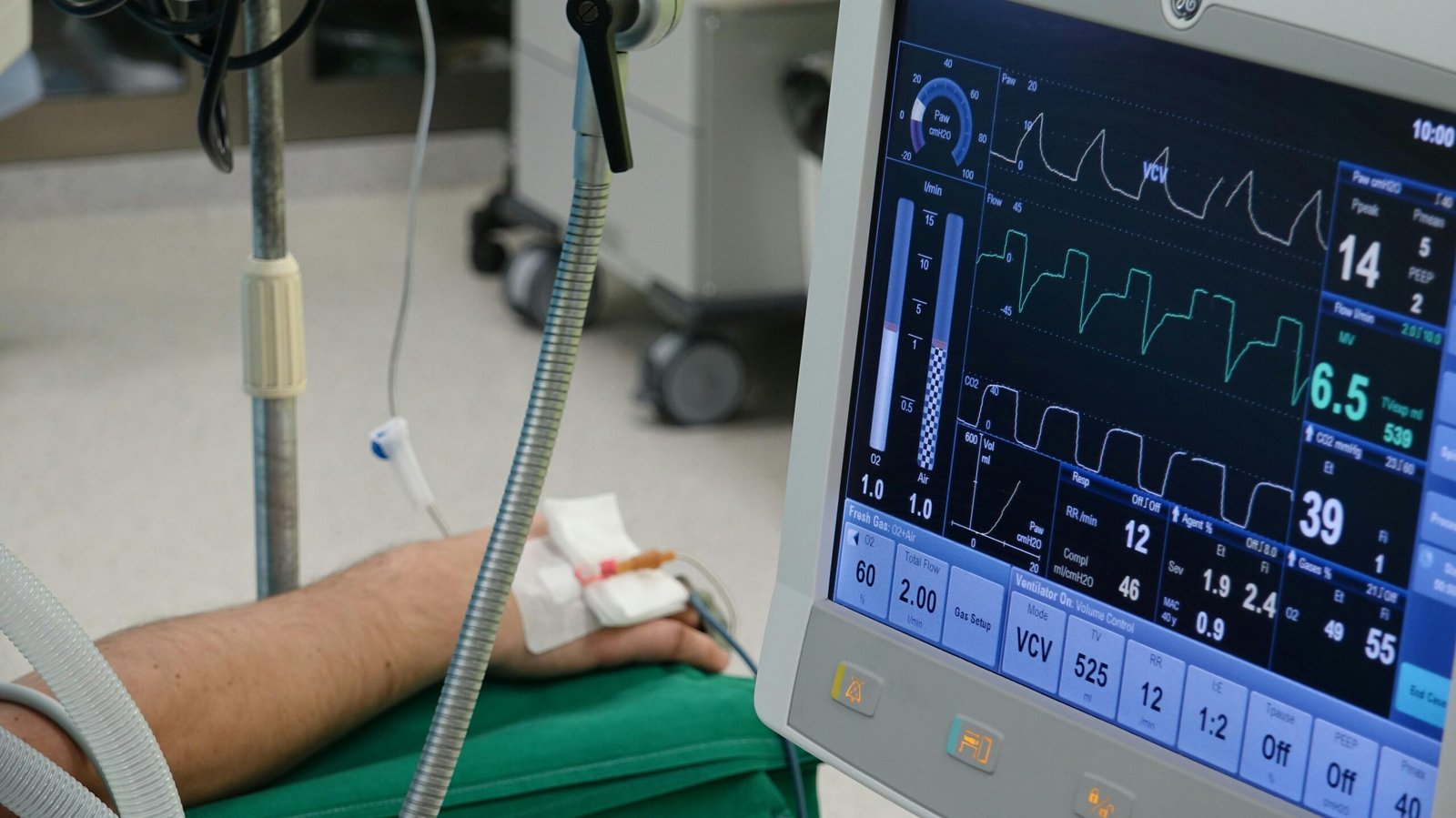
A standard multipara monitor — the workhorse of any hospital — typically covers ECG, SpO₂, NIBP, RR, and temperature in one compact unit. Upgrading to models with ETCO₂ or IBP makes sense for ICUs and operating theatres. For cardiology units specifically, ST analysis and arrhythmia detection are non-negotiable.
📊
Insert image: Close-up of a multipara monitor screen showing ECG waveform, SpO₂, NIBP, and RR readouts simultaneously
Types of Patient Monitors: Which One Does Your Department Need?
Walk through any well-equipped Sri Lankan hospital and you will spot at least three or four different types of monitors. Each has its place. Choosing the wrong type is an expensive mistake — so let’s get this right.
🖥️
Multipara / Bedside Monitor
Tracks 5–12 parameters simultaneously. The standard for ICU, CCU, and post-operative wards.
❤️
Cardiac Monitor
Focused on ECG, arrhythmia detection, and ST analysis. Essential for cardiology units.
🚑
Portable / Transport Monitor
Compact, battery-backed. Built for ambulances, patient transport, and emergency response.
🍼
Neonatal / Fetal Monitor
Sensitive ranges for newborns and foetuses. Paediatric and maternity wards.
🩺
Vital Signs Monitor
Spot-check device — BP, SpO₂, temp, pulse. Ideal for outpatient clinics and GP rooms.
📡
Wireless / Central Monitoring
Links multiple bedside units to a central nurses’ station. Perfect for large ward networks.
For most Sri Lankan hospitals building or upgrading a general ICU, a multipara monitor with at least 5 parameters, a large colour TFT display, and dual battery backup is the smart starting point. From there, you can scale up based on department needs.
Top Patient Monitors to Consider in 2026
I have pulled together the strongest contenders across different budget tiers and clinical settings. Whether you are equipping a high-dependency unit in a private hospital or sourcing monitors for a district general hospital, there is something here for you.
🔬
Insert image: Side-by-side comparison of Mindray BeneVision N15 and Philips IntelliVue MP90 in a clinical setting
| Monitor | Best For | Key Features | Tier |
|---|---|---|---|
| Philips IntelliVue MP90 ICU | High-dependency ICU | Event surveillance, smart alarm prioritization, NBP display, extensive parameter support | Premium |
| Mindray BeneVision N12/N15 ICU | ICU & multi-care | Modular design, touchscreen, arrhythmia detection, flexible parameter upgrades | Premium–Mid |
| GE CARESCAPE B155M ICU | Acute care, anaesthesia | Entropy/NMT support, scalable, integrates with CARESCAPE network | Premium–Mid |
| BPL Ultima Prime ICU | ICU, cardiology | 12.1″ TFT, 10 waveforms, ST/arrhythmia, drug dosage calc, dual battery | Mid |
| Schiller Truscope 3 | Cardiology, general wards | 12.1″ touch, Masimo SpO₂, 7-lead ECG, 10 waveforms, ST analysis | Mid |
| Comen STAR8000E | General wards, ICU | 12.1″ colour touch, arrhythmia/ST, 96-hour trends, ECG/SpO₂/RESP/NIBP/temp | Mid |
| Mindray uMEC10 Budget | Hospitals on a budget | Reliable ECG/SpO₂/NIBP, low maintenance, proven in high-volume settings | Budget |
| Philips IntelliVue X2 Portable | Transport, ER | 3.5″ TFT, wireless, auto alarms, touchscreen & hard keys | Premium |
| Spacelabs Ultraview SL9000 | Stationary & mobile | Central surveillance integration, user-friendly workflow | Mid–Premium |
| Dräger Infinity Delta XL Neo–Adult | Neonatal to adult | 12.2″ TFT-LCD, 6–8 channels, 24-hour trends | Premium |
| Welch Allyn Connex Spot Portable | Outpatient, spot-check | SureBP in 15 seconds, neonatal–adult range, scale integration | Mid |
| Contec CMS5100 Budget | Clinics, smaller hospitals | ECG/SpO₂/NIBP/temp, lightweight, data storage, affordable entry point | Budget |
| Nihon Kohden Lifescope | Critical & general care | Precise ECG/telemetry, reliable in high-acuity environments | Premium |
My honest take for Sri Lankan buyers: Mindray (uMEC10, BeneVision N-Series) offers the best balance of performance and cost for most public hospitals. Philips IntelliVue MP90 and GE CARESCAPE are the gold standard for private tertiary centres. If budget is a real constraint, the Contec CMS5100 is a solid entry-level choice for small clinics — just pair it with a proper service contract.
Patient Monitors in the ICU: What Your Critical Care Team Really Needs
The ICU is where monitoring demands are most unforgiving. A patient on mechanical ventilation, post-cardiac surgery, or in septic shock needs continuous observation of parameters that a standard ward monitor simply cannot handle.
For your ICU setup, here is what I would look for without compromise:
- 12-lead ECG with arrhythmia detection — auto-recognition of AF, VT, VF saves critical minutes
- ST-segment analysis — essential for post-MI monitoring and cardiology high-dependency units
- ETCO₂ (end-tidal CO₂) — confirms airway integrity and ventilation adequacy in intubated patients
- Invasive blood pressure (IBP) — real-time arterial line monitoring for haemodynamically unstable patients
- Dual battery backup — power outages happen; your monitor must not go dark mid-resuscitation
- Trending over 24–96 hours — clinical decisions in the ICU are pattern-based, not point-in-time
- Central monitoring integration — one nurse covering 6 beds needs a central station that aggregates all alarms
- Alarm customisation — reduce alarm fatigue by setting patient-specific limits, not factory defaults
“Alarm fatigue is real. In an ICU where every monitor is shouting at once, nurses stop hearing them. A well-configured monitor with smart alarm prioritization is not a nice-to-have — it is a patient safety necessity.”
🖥️
Insert image: Mindray BeneVision N15 or Philips IntelliVue MP90 at an ICU bedside showing multi-parameter waveform display
How to Check and Calibrate Your Patient Monitor: A Quick Protocol
Even the best monitor is useless if your team does not know how to verify it is working correctly. Here is a simple daily check protocol your nursing staff can follow:
- Power check — confirm mains connection and battery status
- Self-test — run the built-in diagnostic; most modern monitors do this on boot
- Settings review — verify alarm limits are set for the specific patient, not factory defaults
- Sensor connection — check SpO₂ probe placement, ECG lead connectivity, NIBP cuff positioning
- Waveform inspection — confirm clean ECG trace; artefact means a loose lead, not an arrhythmia
- Documentation — log the check time, readings, and any deviations in the patient record
As for calibration: follow manufacturer guidelines strictly. Most modern monitors require professional biomedical engineering service every 6–12 months, plus daily spot-checks. In Sri Lanka, several biomedical engineering units within the Ministry of Health provide this service — make sure yours is on the schedule.
Wireless Patient Monitoring Systems: The Future Is Already Here
Sri Lanka’s larger private hospitals — and increasingly some public sector facilities — are moving toward wireless patient monitoring systems that connect bedside monitors to central nursing stations and even to clinician smartphones.
The advantages are significant. Nursing staff can monitor patients across a ward from a single screen. Alerts go directly to the responsible clinician’s device. Patient data integrates with electronic medical records, eliminating manual transcription errors. And when a patient needs to be moved — to radiology, to theatre, back from ICU — a portable wireless monitor means continuity without a dangerous gap in observation.
Brands like Spacelabs Xprezzon (with custom alarm and EMR integration), Philips IntelliVue X2 (wireless transport), and Nihon Kohden Lifescope (telemetry-grade ECG) are leading this space. If you are planning a hospital IT infrastructure upgrade, factor in Wi-Fi coverage for medical-grade wireless monitoring — it is worth the investment.
Frequently Asked Questions About Patient Monitors
What is a patient monitor used for?
A patient monitor continuously tracks vital signs — including heart rate, blood pressure, respiratory rate, oxygen saturation, and temperature — to detect changes in a patient’s condition in real time. When any parameter moves outside safe limits, it triggers an audio-visual alarm so staff can intervene promptly.
What parameters does a patient monitor measure?
The most common parameters include ECG/heart rate, SpO₂ (pulse oximetry), NIBP (non-invasive blood pressure), respiration rate, and body temperature. Advanced monitors also support ETCO₂ (end-tidal CO₂), invasive blood pressure (IBP), ST-segment analysis, and arrhythmia detection.
How does a patient monitor alarm work?
The monitor compares real-time readings to preset upper and lower thresholds for each parameter. If a value crosses either boundary, it triggers both an audible alarm tone and a visual alert on screen. Modern monitors also support smart alarm prioritization — differentiating critical alarms from advisory ones — to reduce alarm fatigue in busy wards.
What are the types of patient monitors?
Main types include multipara monitors (multiple parameters simultaneously), dedicated cardiac monitors, vital signs spot-check monitors, fetal/neonatal monitors, portable transport monitors, and wireless central monitoring systems. The right type depends entirely on your clinical setting and patient population.
What is ETCO₂ in patient monitors?
ETCO₂ (end-tidal carbon dioxide) measures the concentration of CO₂ in exhaled breath at the end of a breath cycle. It is a direct indicator of ventilation adequacy and airway integrity — critical for intubated patients in the ICU or anaesthetised patients in the operating theatre. A sudden drop in ETCO₂ may indicate loss of airway or cardiovascular collapse.
Are patient monitors portable?
Yes. Many modern patient monitors — including tabletop and handheld versions — are specifically designed for mobility. Portable monitors with built-in battery backup are essential for patient transport within the hospital, ambulance use, and emergency response. Models like the Philips IntelliVue X2 and Welch Allyn Connex Spot are widely used in transport and outpatient settings.
How often should patient monitors be calibrated?
Calibration schedules depend on the manufacturer’s guidelines, but as a general rule: daily functional checks should be performed by nursing staff, and full professional calibration and biomedical servicing should happen every 6–12 months. In Sri Lanka, the Ministry of Health’s biomedical engineering service can assist public sector hospitals with scheduled maintenance.
What is the use of patient monitors in the ICU?
In the ICU, patient monitors provide continuous real-time data on critically ill patients — enabling timely interventions for haemodynamic instability, arrhythmias, respiratory failure, and other emergencies. ICU monitors typically support advanced parameters like ETCO₂, IBP, ST analysis, and multi-day trend tracking, which are essential for managing complex cases.
What to Look for When Buying a Patient Monitor in Sri Lanka
Procurement decisions in Sri Lankan healthcare are often complicated — budget approvals, tender processes, service availability. Here are the key criteria to evaluate before you sign any purchase order:
| Factor | Why It Matters | What to Ask the Supplier |
|---|---|---|
| Parameter Coverage | Must match your clinical setting’s specific monitoring needs | Can ETCO₂/IBP be added later as a modular upgrade? |
| Display Size & Clarity | Staff must read it clearly from across the bed | Minimum 10.1″ TFT for ICU; 7″ acceptable for transport |
| Battery Backup | Power cuts are a reality in Sri Lanka | How many hours of runtime on internal battery at full monitoring? |
| Alarm System | Smart prioritization prevents alarm fatigue | Does it support tiered alarms (critical vs. advisory)? |
| After-Sales Service | Downtime = risk to patients | Is there a local biomedical engineer certified for this brand? |
| Data Connectivity | EMR integration reduces transcription errors | Does it support HL7 / DICOM / central station integration? |
| Warranty & Spares | Spare parts availability is often the hidden cost | Are consumables (probes, cuffs, leads) locally available? |
| Ease of Use | Reduces training time and clinical errors | How intuitive is the UI for nurses with mixed tech backgrounds? |
One thing I cannot stress enough: do not buy cheap and regret it at 3 a.m. A monitor that goes offline during a resuscitation because a probe connector failed — one that no local supplier stocks — is far more expensive than the price difference between budget and mid-tier models.
Final Thoughts: Making the Right Call for Your Patients
A patient monitor is one of the most consequential pieces of equipment in your facility. It is on, always. It is watching when you are not. And when something goes wrong with your patient’s condition, it is often the monitor — not a human — that catches it first.
In Sri Lanka’s evolving healthcare landscape, the good news is that access to quality monitoring technology has never been better. Brands like Mindray, Philips, GE, Schiller, and Comen all have local representation or distribution channels. Whether you are a cardiologist looking for arrhythmia detection in your CCU, an ICU consultant demanding ETCO₂ and IBP support, or a clinic manager sourcing a reliable spot-check monitor for your outpatient department — the right device is available and accessible.
My advice? Start with the clinical need, not the brochure. Know your patient population, your ward layout, your power supply reliability, and your biomedical engineering support capacity. Then match the monitor to those realities — not to the most impressive spec sheet in the pile.
And if you are unsure, talk to a clinical engineer or a peer institution that has already deployed the system you are considering. There is no better review than a real-world one from a doctor or nurse who uses the thing every day.
Ready to Upgrade Your Patient Monitoring Setup?
Share this guide with your procurement team, hospital administrator, or biomedical engineering department — and start the conversation about what your patients genuinely need at every bedside. Explore Patient Monitor Options →