
The Real Guide to Insulin Cooling Cases in Sri Lanka (And Why You Probably Need One)
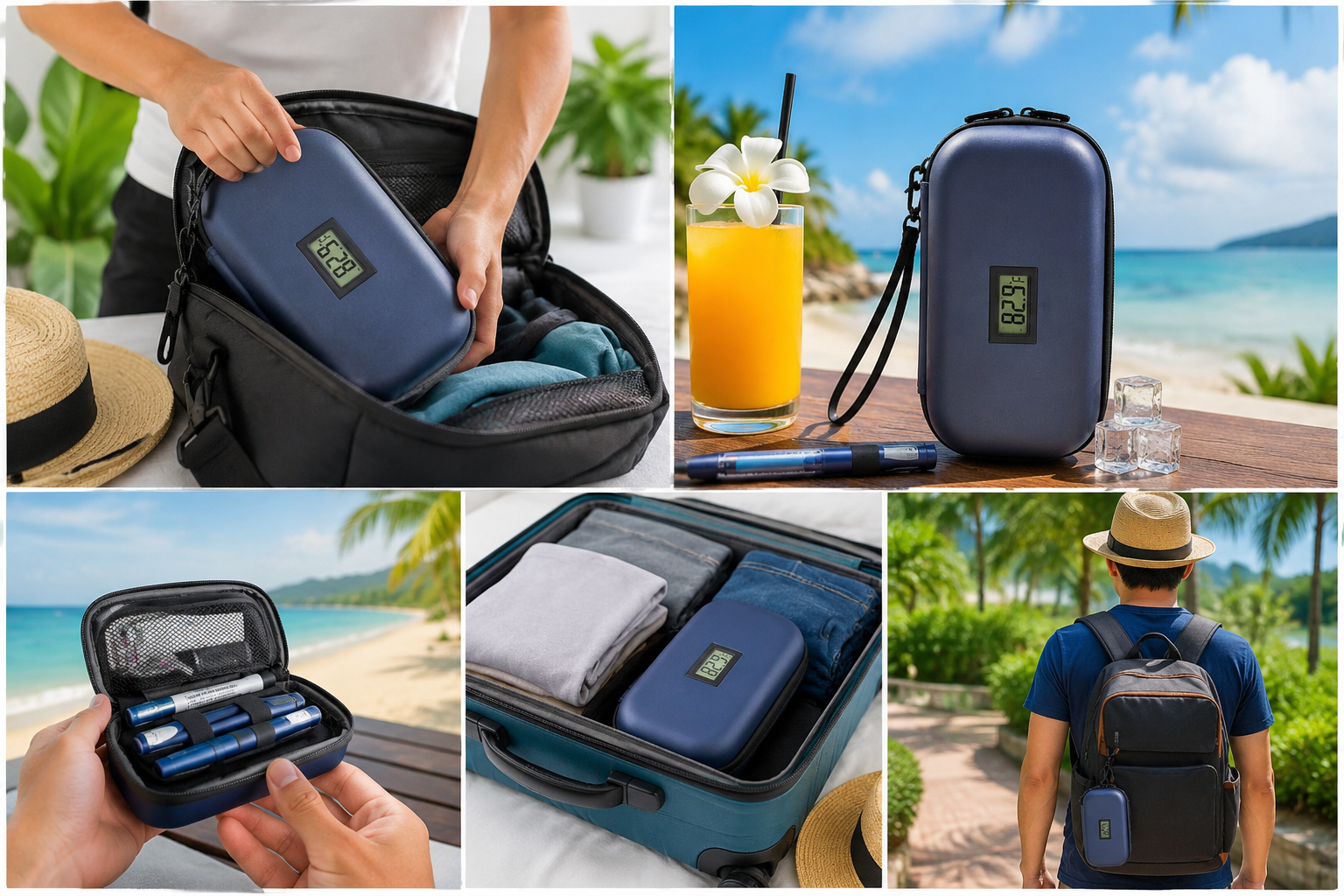
Let’s be honest for a second. If you live in Sri Lanka and you use insulin, you already know the real enemy isn’t the diabetes itself — it’s the weather. Colombo traffic in April feels like sitting inside an oven. Kandy’s humidity clings to your skin. And your insulin? It hates every bit of it just as much as you do.
Insulin is fussy. Leave it in a hot car, a beach bag, or your school backpack for too long, and it quietly loses potency — no dramatic warning sign, just a slow fade that can throw your blood sugar control off without you realizing why. That’s where an insulin cooling case comes in. Not as a luxury gadget, but as something closer to a lifeline for anyone managing Type 1 or Type 2 diabetes on insulin therapy.
In this guide, I’m going to walk you through everything — how these cases actually work, what separates a good one from a gimmick, and which types make sense whether you’re a parent packing your child’s school bag, a nurse doing home visits, a pilgrim heading to Kataragama, or a frequent flyer jetting between Colombo and Dubai.
Why Insulin Cooling Matters More in Sri Lanka Than Almost Anywhere Else
Most insulin guidance you’ll find online is written for people living in temperate countries. It rarely accounts for what daily life actually looks like in a tropical island nation where the average temperature rarely dips below 27°C, and where power cuts and long commutes on public transport are simply part of the routine.
Unopened insulin generally needs refrigeration (around 2°C to 8°C), while insulin that’s already in use can typically be kept at room temperature for a limited window — but “room temperature” in a Sri Lankan household in July is a very different number than in London or Melbourne. That mismatch is exactly why a dedicated cooling case isn’t optional for a lot of people here — it’s essential.
What Is an Insulin Cooling Case and How Does It Work?
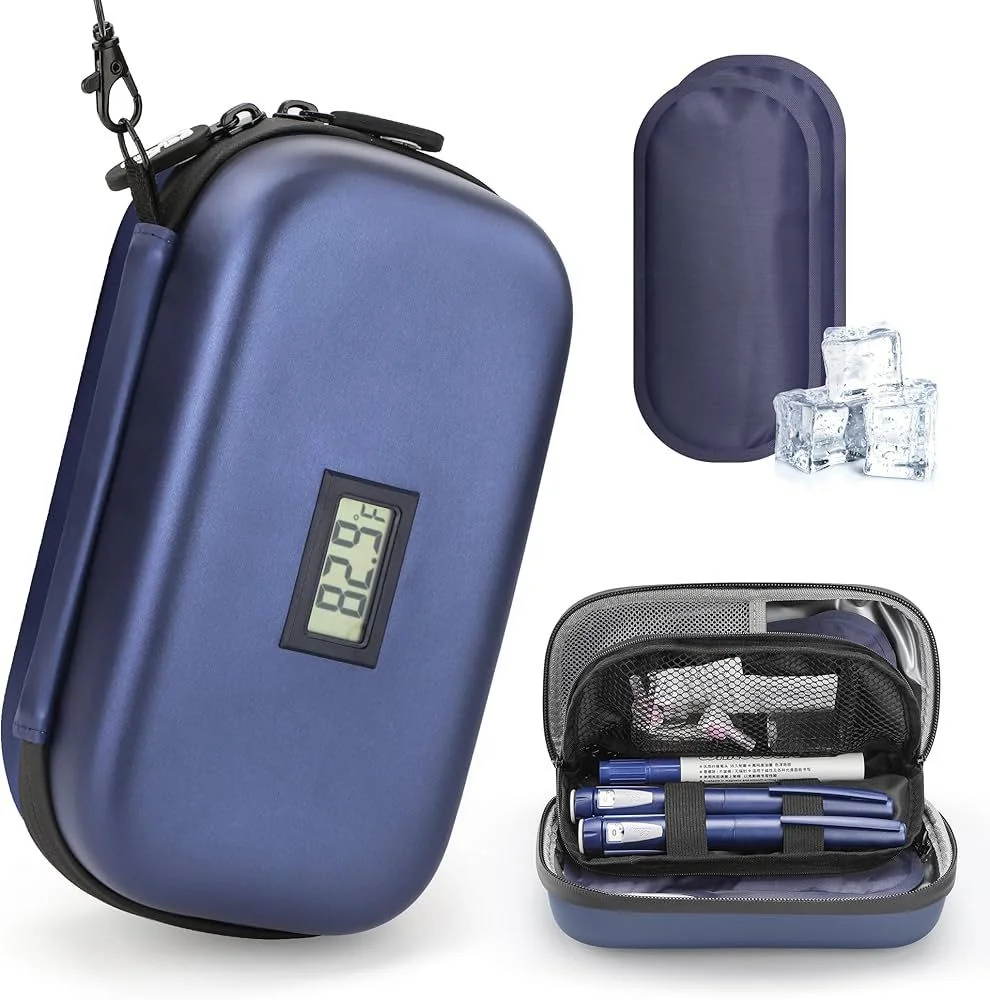
An insulin cooling case is a purpose-built container designed to keep insulin pens, vials, or pumps within a safe temperature range while you’re away from a refrigerator. Broadly, they work in one of two ways:
- Passive (evaporative or gel-based) cooling — uses water-activated gel packs, evaporative fabric, or frozen ice packs to maintain a cool internal environment without any power source.
- Active (battery or rechargeable) cooling — uses a small thermoelectric or compressor-based cooling unit, often paired with a digital temperature display, to actively regulate the internal temperature.
Both approaches aim to keep insulin below the point where heat starts to degrade it, but they go about it very differently — and that difference matters a lot depending on your lifestyle.
Passive vs Electric Insulin Cooling Cases: Quick Comparison
| Feature | Passive / Non-Electric Case | Battery-Powered / Electric Case |
|---|---|---|
| Power source | Water, gel, or ice packs | Rechargeable battery or USB power |
| Best for | Travel, camping, pilgrimages, power-cut prone areas | Home use, hospitals, long-haul flights |
| Maintenance | Needs periodic re-soaking or re-freezing | Needs charging |
| Temperature display | Rarely included | Often included |
| Weight | Usually lighter | Slightly heavier |
| Ideal user | Backpackers, students, hikers | Business travelers, patients needing precise control |
Neither option is objectively “better” — it genuinely comes down to how and where you’re using it.
What Temperature Should Insulin Be Stored at While Traveling?
This is one of the most searched questions, and for good reason. As a general rule (always double-check the specific guidance printed on your insulin’s packaging or check with your pharmacist):
| Insulin Status | Recommended Temperature Range |
|---|---|
| Unopened, in storage | 2°C – 8°C (refrigerated) |
| In-use / carried daily | Below 25°C – 30°C, away from direct sunlight |
| Never store insulin | Frozen, or above 30°C for extended periods |
A good cooling case simply gives you a portable version of that safe middle zone, wherever you happen to be.
Do I Need a Battery-Powered Case or a Passive One?
Ask yourself these three questions:
- Will I have regular access to charging points? If not, go passive.
- Am I traveling somewhere with unreliable electricity? Passive wins again.
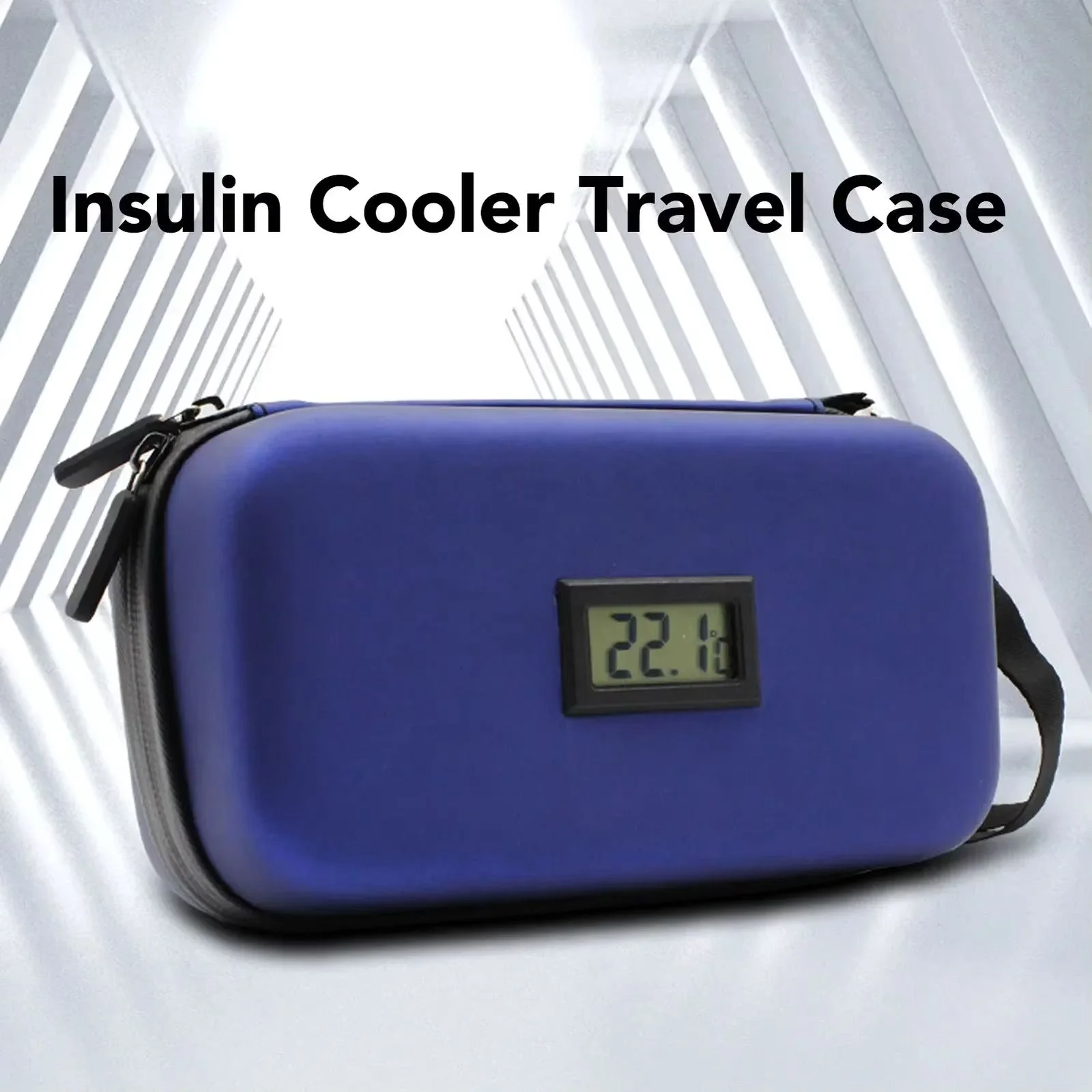
- Do I want a precise digital readout of the internal temperature? Then an electric or hybrid case with an LCD display is worth the extra cost.
For most people in Sri Lanka — especially students, pilgrims, and outdoor workers — a reliable non-electric insulin cooler case tends to be the more practical everyday choice. Business travelers and frequent flyers, on the other hand, often lean toward rechargeable options with built-in monitoring.
Is an Insulin Cooling Case Safe for Air Travel? Are They TSA Approved?
Here’s an important clarification: there’s no official “TSA-approved” stamp that gets issued to individual cooling case products. What TSA (and most international airport authorities, including those Sri Lankan travelers pass through) actually require is that insulin, insulin cooling cases, and related diabetes supplies be permitted in carry-on luggage — which they generally are, even in liquid quantities exceeding normal carry-on limits, provided they’re declared at security.
A few practical tips for flying with insulin:
- Always carry your insulin and cooling case in your hand luggage, never checked baggage (cargo holds can freeze insulin).
- Carry a doctor’s letter or prescription confirming your need for insulin and related supplies.
- Inform airport security staff before screening if your case contains gel packs or ice packs.
- Choose a case that fits comfortably within your airline’s carry-on dimensions.
How Long Can an Insulin Cooling Case Keep Insulin Cold?
This varies significantly by product and type:
- Evaporative wallets (like the well-known FRIO-style design) typically stay cool for 24–48 hours with re-soaking.
- Gel/ice-pack passive coolers often last anywhere from 12 to 60 hours, depending on ambient temperature and how often the case is opened.
- Battery-powered coolers can maintain consistent cooling for as long as the battery holds a charge, often 8–24 hours per charge, with some rechargeable models lasting several days on standby.
Manufacturers’ claimed durations are usually tested under controlled conditions, so real-world performance in Sri Lanka’s climate may run shorter — it’s worth building in a safety margin.
Can an Insulin Cooling Case Be Used for Insulin Pens and Vials?
Yes — most quality cases are designed with dedicated slots for both pens and vials, and many double up for other temperature-sensitive injectables (GLP-1 medications like Ozempic being a common example people search for alongside insulin). Just check the internal dimensions before buying, since pen sizes and vial shapes do vary by brand.
How Many Insulin Pens Can Fit in One Cooling Case?
This depends entirely on the design:
- Compact wallet-style cases: usually 1–2 pens
- Mid-size travel cases: typically 2–4 pens plus vials
- Larger family or multi-user coolers: can hold 4 or more pens, plus additional medication or supplies
If you’re a parent managing a child’s diabetes supplies for school, or a nurse carrying medication for multiple patients, sizing up is almost always worth it.
How Do I Choose the Best Insulin Cooling Case for Hot Weather?
Given Sri Lanka’s climate, here’s what I’d genuinely prioritize, in order:
- Consistent cooling duration over flashy features
- Insulated, high-quality lining (EVA insulation is a common, dependable choice)
- Compact size that survives being tossed into a school bag, tuk-tuk, or backpack
- A visible temperature indicator, if you tend to worry about whether it’s “still working”
- Ease of cleaning, especially if you’re using it daily
12 Popular Insulin Cooling Case Types Worth Knowing About
Rather than chasing whatever’s trending, it helps to understand the categories of cases available, since availability and pricing for specific imported brands can shift in the Sri Lankan market. Here’s a practical breakdown of the types you’ll come across in most current roundups and reviews:
- Evaporative cooling wallets — no batteries, no ice, just water-activated fabric. Great for pilgrims and backpackers.
- EVA-insulated travel pouches — budget-friendly, sturdy, good for daily carry.
- Digital display travel coolers — show internal temperature in real time, useful for anxious first-time users.
- Extended-duration passive coolers — built with thicker insulation for multi-day trips or camping.
- Ice-pack coolers — classic design, dependable but need a freezer nearby to recharge the packs.
- Rechargeable electric coolers — best for home-to-office routines with regular charging access.
- Combination medication coolers — designed to carry insulin alongside GLP-1 pens or other injectables.
- Box-style hard coolers — more rigid protection, good for people worried about crushing.
- Multi-medication travel bags — a hybrid pouch for people managing several prescriptions at once.
- Compact pen-only cases — minimalist, slips into a pocket or small bag.
- LCD-monitored travel cases — favored for long-haul flights where reassurance matters.
- Non-electric family coolers — larger capacity, good for households with more than one insulin user.
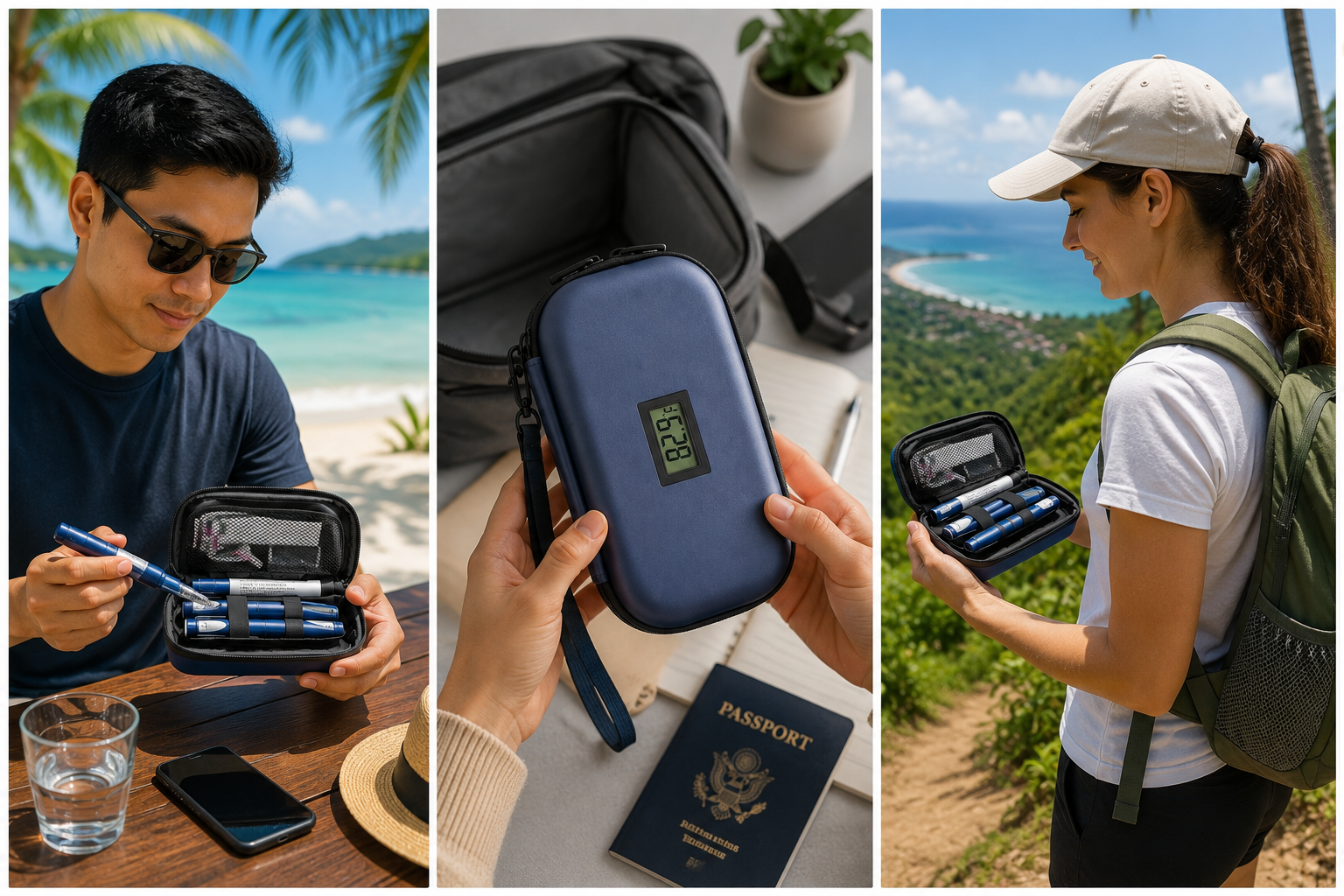
A quick honest note: product availability, pricing, and import status for specific international brands can change often, especially in Sri Lanka’s market. I’d recommend checking current stock with a local pharmacy, diabetes clinic, or a trusted online retailer before buying, and always confirming the internal temperature range claimed by the manufacturer.
What’s the Difference Between an Insulin Cooling Case and an Insulin Travel Cooler?
In everyday use, people use these terms almost interchangeably, but there’s a subtle distinction:
- Insulin cooling case usually refers to a compact, everyday-carry pouch — think pocket or purse-sized.
- Insulin travel cooler tends to describe a slightly larger unit, built specifically for multi-day trips, flights, or extended time away from a fridge.
If you only need something for the commute to work or school, a case is probably enough. If you’re planning a longer trip — a pilgrimage, an overseas holiday, or fieldwork away from home — a dedicated travel cooler is the safer bet.
How Do I Clean and Maintain an Insulin Cooling Case?
A little maintenance goes a long way:
- Wipe the interior with a damp, soft cloth after each use — avoid harsh chemicals near where medication sits.
- Let evaporative wallets air dry fully before storing them away, to prevent mildew in humid conditions.
- Check gel packs periodically for leaks or tears.
- For electric coolers, keep the battery contacts dry and avoid charging in direct sunlight.
- Replace the case altogether if the insulation starts to feel less firm — that’s usually a sign the cooling performance has dropped.
Can I Use an Insulin Cooling Case Without Electricity?
Absolutely — this is actually one of the biggest reasons non-electric cases remain so popular in Sri Lanka. Evaporative wallets and gel-pack coolers work entirely through physics (evaporation or stored cold energy), which makes them ideal for:
- Pilgrims traveling to remote temples or religious sites
- Outdoor workers and estate staff without regular power access
- Campers and hikers
- Anyone who’s experienced one too many unpredictable power cuts
Wrapping It Up: What Should You Actually Do Next?
If there’s one thing I want you to take away from all of this, it’s that an insulin cooling case isn’t an accessory — it’s part of responsible diabetes management, especially in a climate like ours. Whether you’re a parent trying to keep your child’s school bag insulin-safe, a nurse making home visits across town, or someone just trying to survive a Colombo afternoon without your insulin quietly losing effectiveness, the right case makes a genuine difference.
Start by figuring out your lifestyle — daily commuter, occasional traveler, or frequent flyer — then match that against passive versus electric cooling, size requirements, and duration needs. And when in doubt, a quick chat with your endocrinologist, diabetes educator, or pharmacist about your specific insulin type is always worth it before you buy.
Got a cooling case that’s worked well for you, or a travel horror story involving melted ice packs? Drop it in the comments — this is exactly the kind of thing we figure out better together.
👉 Ready to buy one? Check out this Portable Insulin Cooler case, available locally through MS Medicals a straightforward option if you’d rather order from within Sri Lanka than wait on an international shipment.

Best cooler box ever
555
555′”