
Updated May 2026 · 12 min read · For clinics, EMS teams, home care providers & more
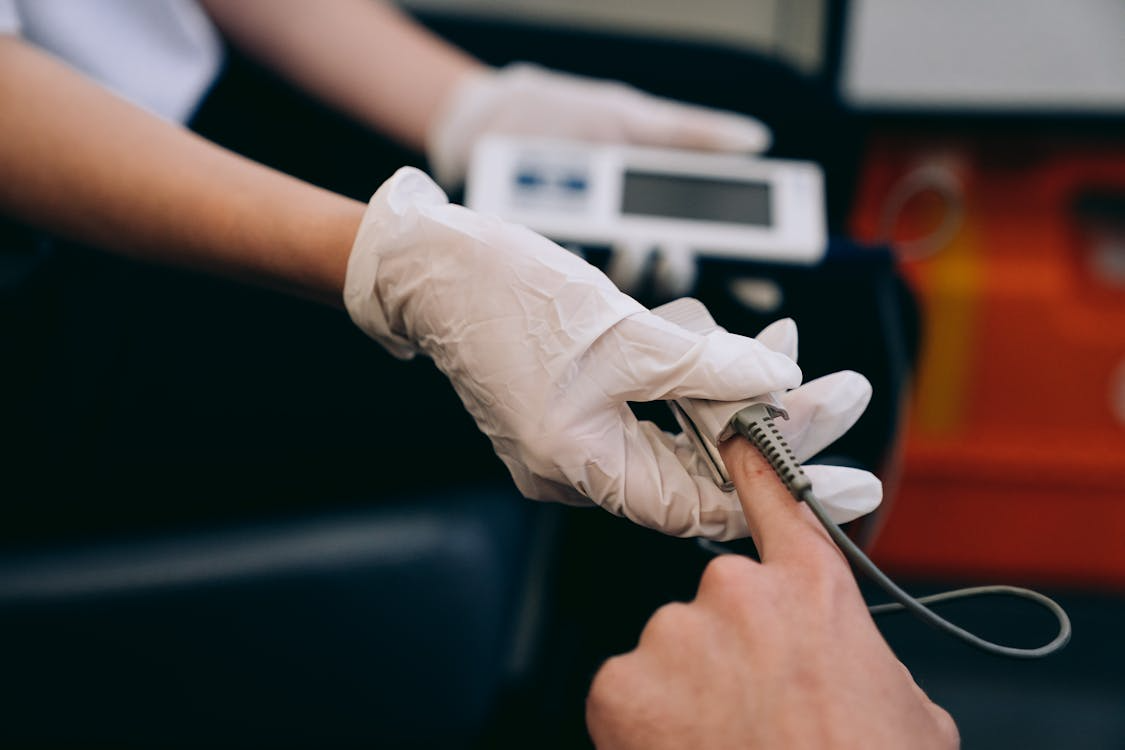
Imagine this. A patient collapses at a remote rural clinic in Kurunegala. The nearest hospital is forty minutes away. The one piece of equipment that could make the difference between life and death? A hand-held patient monitor — small enough to fit in a bag, powerful enough to track oxygen levels, blood pressure, heart rate, and temperature all at once.
I’ve spoken to nurses, EMS workers, and clinic owners across Sri Lanka — and there’s one thing they all agree on: portable vital signs monitoring is no longer a luxury. It’s a necessity. Whether you’re running a bustling clinic in Colombo, managing an elderly patient at home in Galle, or responding to a disaster in the Central Province, a compact, battery-powered monitor can genuinely save lives.
So let’s break it all down — what these devices actually do, which ones are worth buying, how much they cost, and everything else you need to know before making a decision.
Portable patient monitor SpO2 NIBP ECG Emergency use Sri Lanka
What Is a Hand-Held Patient Monitor?
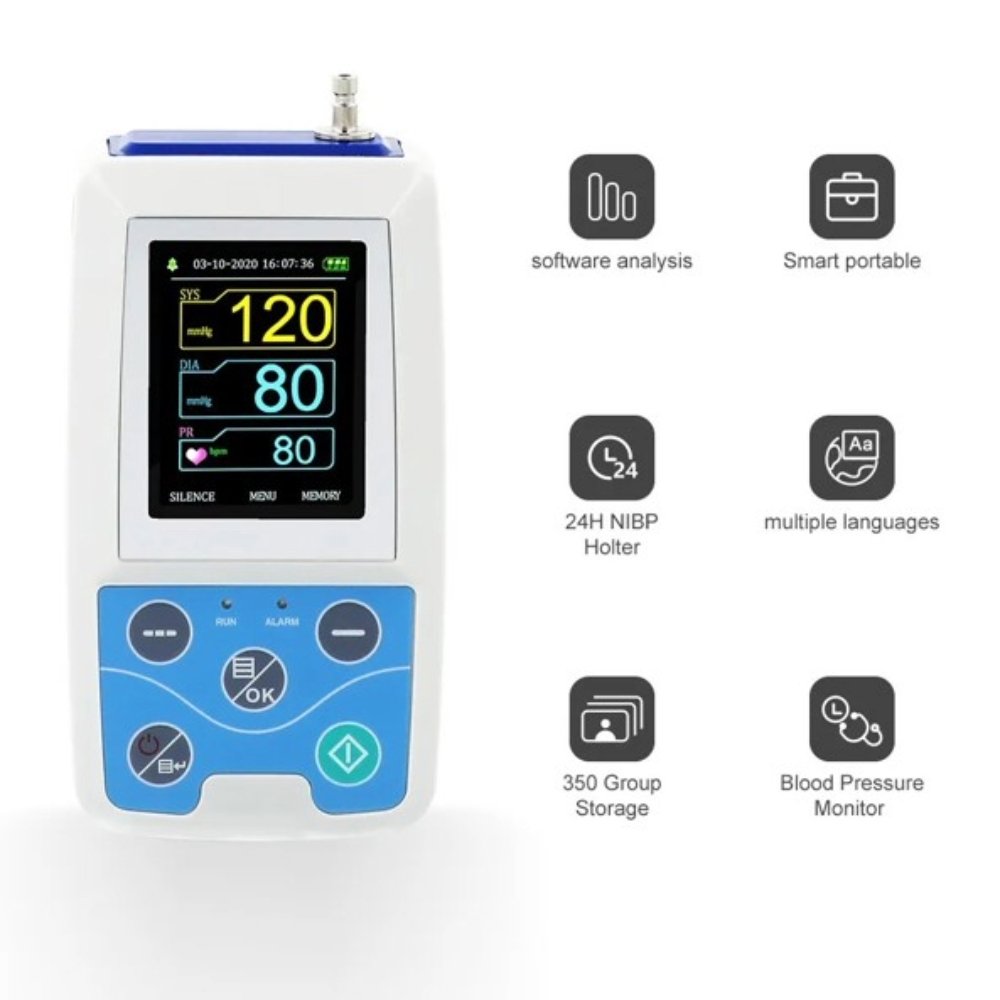
A hand-held patient monitor — sometimes called a portable multiparameter monitor or spot check vital signs device — is a compact, handheld or palm-sized medical device that measures two or more vital signs simultaneously. Unlike large tabletop hospital monitors that are fixed to a bedside stand, these devices are designed to move with the clinician or caregiver.
Think of it as the Swiss Army knife of patient monitoring. Most good models measure:
- SpO2 (blood oxygen saturation) — critical for detecting hypoxia
- NIBP (non-invasive blood pressure) — both systolic and diastolic
- Heart rate (HR) and pulse rate
- Temperature — skin, oral, or infrared
- Respiration rate (RR) — in more advanced models
- ECG (electrocardiogram) — in premium models like the Schiller Medilog DARWIN
For Sri Lankan healthcare workers: Look for models with a wide temperature operating range and dust resistance — important for field conditions in dry and humid zones alike.
What Vital Signs Does a Hand-Held Patient Monitor Measure?
This is the number one question I get asked. And honestly, it depends on the model. But here’s a clear breakdown of what most current handheld monitors track — and what the premium ones add on top:
| Parameter | Basic Models | Mid-Range | Premium |
|---|---|---|---|
| SpO2 (Oxygen saturation) | ✓ | ✓ | ✓ |
| Pulse/Heart Rate | ✓ | ✓ | ✓ |
| NIBP (Blood pressure) | — | ✓ | ✓ |
| Temperature | — | ✓ | ✓ |
| Respiration Rate | — | Some | ✓ |
| ECG (single or 12-lead) | — | — | ✓ |
| Perfusion Index | Some | ✓ | ✓ |
| EtCO2 (Capnography) | — | — | Select models |
For most Sri Lankan clinics and EMS teams, a mid-range device with SpO2, NIBP, HR, and temperature is the sweet spot. It covers 90% of routine vital checks without being unnecessarily expensive.
Hand-Held vs. Tabletop Patient Monitor — What’s the Actual Difference?
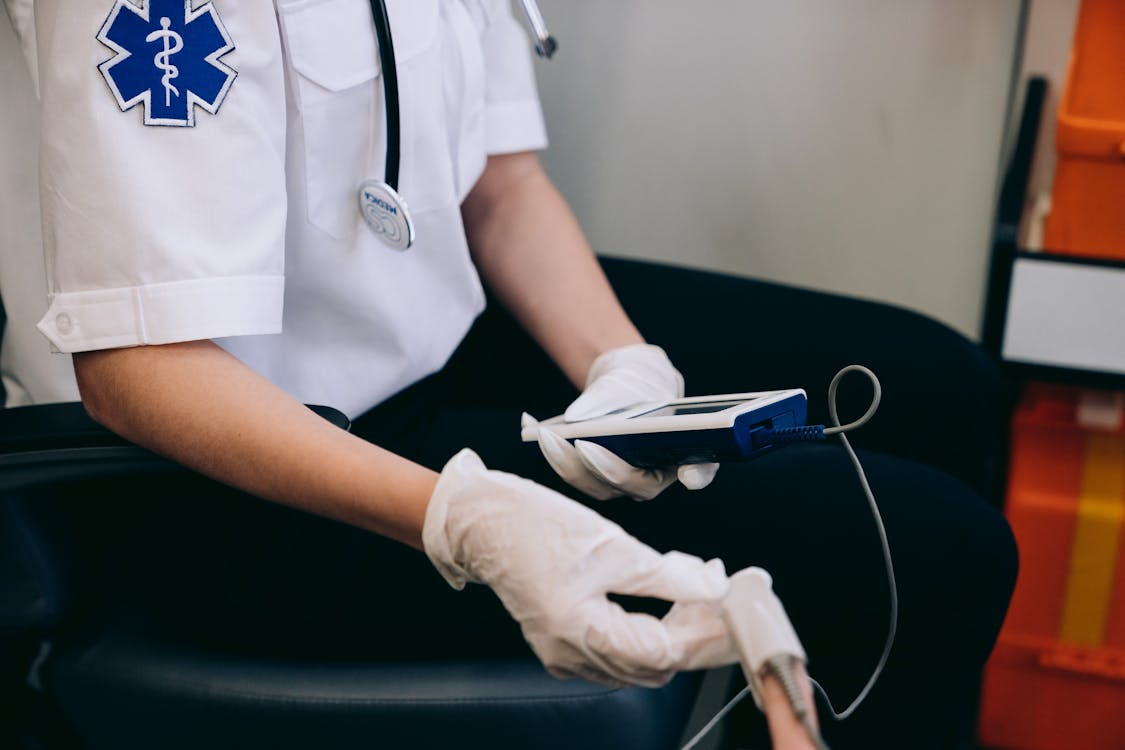
Great question, and one that comes up a lot in purchasing conversations. Here’s the honest truth:
| Feature | Hand-Held Monitor | Tabletop Monitor |
|---|---|---|
| Portability | High — fits in a bag or coat | Low — fixed to stand/cart |
| Battery life | 6–16 hours (rechargeable) | AC powered (limited battery backup) |
| Screen size | Small (3–5 inch) | Large (10–15 inch) |
| Parameter count | 3–8 parameters | 8–15 parameters |
| Price range | ~$300–$2,000 | $2,000–$10,000+ |
| Best for | EMS, home care, field use | ICU, wards, operating rooms |
| Connectivity | Bluetooth, Wi-Fi, USB | Ethernet, hospital network |
If your team is mobile — ambulance crews, community health officers, home visit nurses — go handheld. If you’re running a fixed clinic or ward, a tabletop unit makes more sense. Many Sri Lankan facilities actually use both.
How Accurate Are Hand-Held Patient Monitors?
Let me be direct: a well-calibrated, FDA-approved or CE-certified handheld monitor is clinically accurate. Brands like Masimo, Nonin, Mindray, and Philips consistently achieve SpO2 accuracy within ±2% — matching hospital-grade equipment.
That said, accuracy depends on a few things:
- Proper positioning — especially for NIBP cuffs
- Calibration schedule — most devices need annual calibration
- Patient factors — dark nail polish can affect SpO2 readings; poor circulation affects NIBP
- Certification — always check that the device meets FDA 510(k), CE, or equivalent SLSI (Sri Lanka Standards Institution) recognition
Pro tip for Sri Lanka: Always source devices from certified medical equipment distributors, not general electronics importers. The National Medicines Regulatory Authority (NMRA) of Sri Lanka regulates medical devices — confirm registration before purchasing.
Top 10 Hand-Held Patient Monitors Worth Considering in 2026
Here’s a curated list across different price points and use cases. Whether you’re equipping an ambulance, a rural clinic, or caring for an elderly parent at home — there’s something here for you.
| # | Model | Best For | Key Features | Price Range (USD) |
|---|---|---|---|---|
| 1 | Mindray VS9 | Clinics, EMS | NIBP, SpO2, HR, Temp; 10-hr battery; wireless | $800–$1,200 |
| 2 | Philips Spot Check Monitor | EMS, rugged use | NIBP, SpO2, Temp; drop-resistant | $900–$1,400 |
| 3 | Nonin Onyx Vantage 9590 | Ambulances | SpO2, PR; 160+ hr battery; ambulance-approved | $300–$500 |
| 4 | Masimo MightySat Medical | Home use, chronic patients | SpO2, PR, Perfusion; app connected | $350–$600 |
| 5 | Contec CMS8000 | Multi-param clinics | ECG, SpO2, NIBP, RR; USB/SD export | $600–$1,000 |
| 6 | Schiller Medilog DARWIN | Cardiology clinics | ECG + vitals; Bluetooth; long battery | $1,200–$2,000 |
| 7 | Welch Allyn Spot 4400 | General practice | NIBP, Temp, SpO2 module; trusted brand | $700–$1,100 |
| 8 | Edan iM70 | Lightweight field use | NIBP, SpO2, HR; rechargeable; compact | $500–$800 |
| 9 | Bionet BM3Vital | Small clinics, nursing homes | Tablet-style; NIBP, SpO2, Temp | $400–$700 |
| 10 | ChoiceMMed MD300I | Home, budget-conscious | Wrist/handheld; affordable; multi-use | $120–$300 |
Note: Prices vary significantly by supplier in Sri Lanka. Contact certified local distributors for current LKR pricing and warranty support.
Battery Life — Can It Last Your Whole Shift?
For EMS crews and rural health workers doing 8–12 hour shifts, battery life isn’t just a spec — it’s a safety issue. Here’s what you can realistically expect:
- Basic pulse oximeters (e.g. Nonin Onyx Vantage): 160+ hours — exceptional
- Mid-range multiparameter monitors (e.g. Mindray VS9): 8–12 hours — good for a full shift
- Premium ECG-capable monitors (e.g. Schiller DARWIN): 5–8 hours — adequate with mindful use
Most models now use USB-rechargeable lithium-ion batteries — which is a huge deal for field teams who can charge via vehicle adapters. Always carry a spare battery pack if your workflow demands continuous monitoring.
Are Hand-Held Monitors Suitable for Home Use in Sri Lanka?
Absolutely — and demand is rising fast. Families caring for elderly relatives with diabetes, hypertension, or heart disease are turning to handheld monitors as their first line of daily health management.
For home use in Sri Lanka, here’s what I’d recommend looking for:
- Simple interface — large buttons, clear color display, no complicated setup
- Bluetooth connectivity — sync with a smartphone app to track trends over time
- Alarm functions — alerts for abnormal SpO2 or blood pressure readings
- Affordable price point — models like Masimo MightySat or ChoiceMMed MD300I are great starting points
That said — and this is important — home monitors are a complement to, not a replacement for, professional medical evaluation. If readings are consistently abnormal, see a doctor.
Wireless Connectivity — Do They Connect to Apps or EHR?
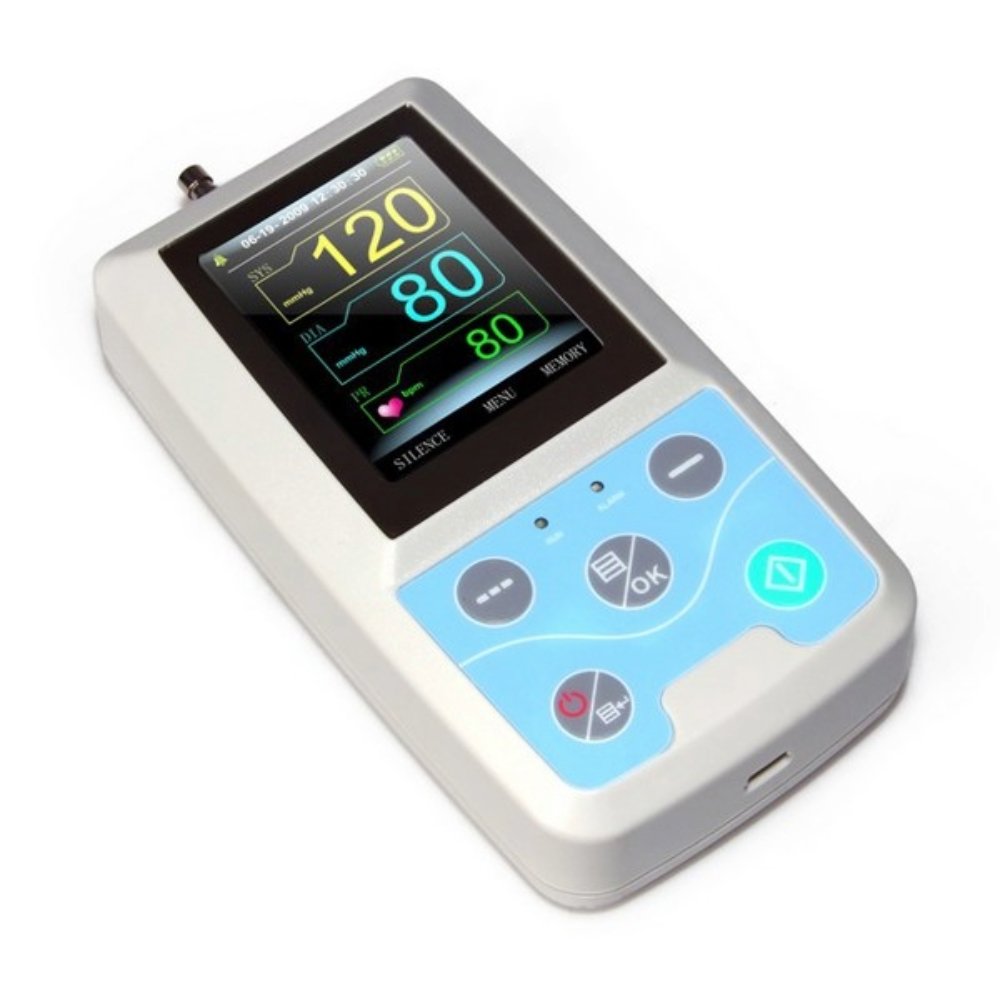
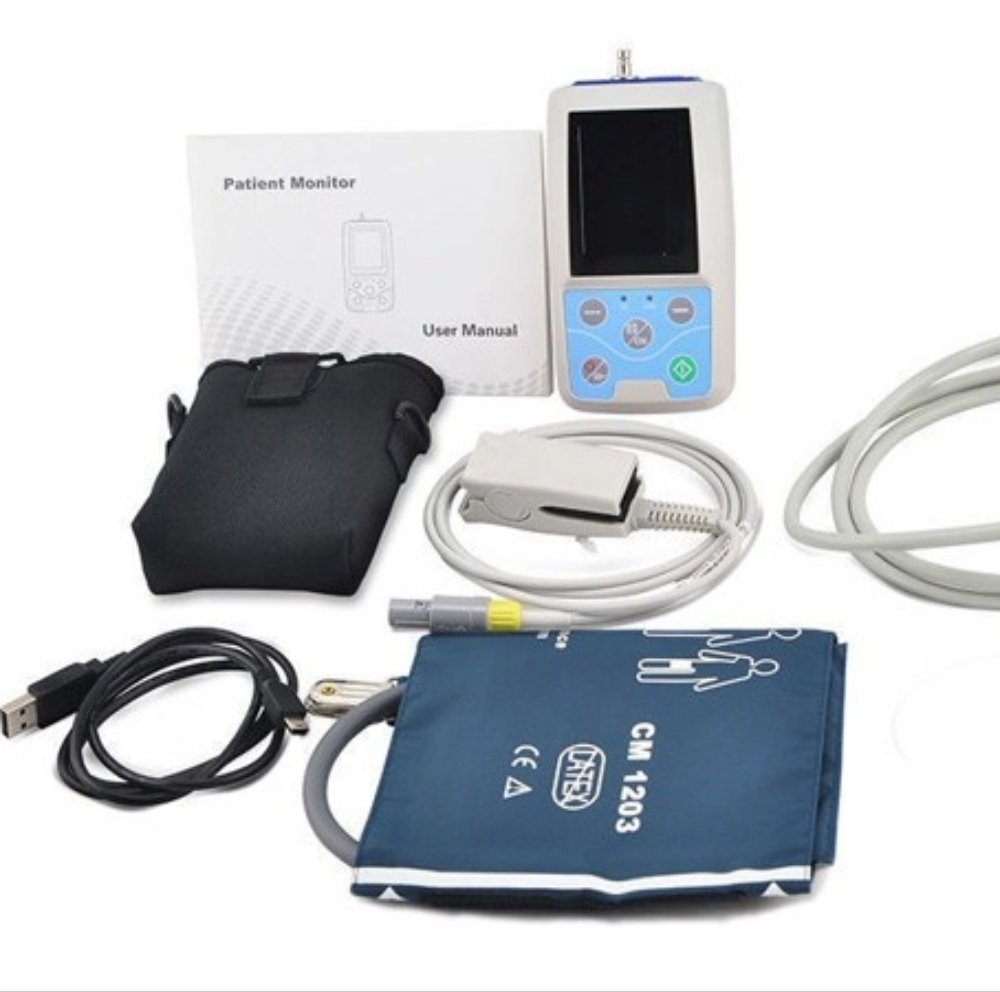
This is where modern handheld monitors have really leveled up. In 2026, most mid-range and premium models support:
- Bluetooth — for pairing with Android/iOS apps (e.g. Masimo’s app, Mindray’s MController)
- Wi-Fi — for sending data directly to hospital EHR systems
- USB/SD card — for manual data export on models like the Contec CMS8000
For larger Sri Lankan health networks integrating with platforms like HealthNet or private hospital EMR systems, Wi-Fi enabled monitors are the smarter long-term investment — even if they cost more upfront.
Do They Have Alarms for Abnormal Vitals?
Yes — and this feature alone can be life-saving in elderly care and ICU step-down situations. Most quality handheld monitors include:
- Audible and visual alarms for SpO2 below threshold (typically <94%)
- High/low blood pressure alerts
- Irregular pulse/arrhythmia detection (in ECG-capable models)
- Low battery warnings
- Customizable alarm thresholds in premium devices
When shopping, always test the alarm sensitivity settings — some budget models have alarms that are either too sensitive (constant false positives) or not sensitive enough. Neither is ideal in a clinical setting.
How Much Do Hand-Held Patient Monitors Cost?
Here’s the real talk on pricing, especially relevant if you’re purchasing from Sri Lanka where import duties and distributor margins add to the base cost:
| Tier | USD Price | Approx. LKR (2026) | What You Get |
|---|---|---|---|
| Budget | $120–$300 | ~Rs. 40,000–100,000 | Basic SpO2 + HR; limited features |
| Mid-range | $300–$800 | ~Rs. 100,000–265,000 | SpO2, NIBP, Temp, HR; Bluetooth |
| Professional | $800–$1,500 | ~Rs. 265,000–500,000 | Multi-param, wireless, EHR-ready |
| Premium/ECG | $1,500–$2,000+ | ~Rs. 500,000+ | ECG, full multiparameter, data analytics |
Exchange rate estimates based on approximate 2026 LKR/USD conversion. Always confirm current rates with your supplier.
Are They FDA-Approved or CE-Certified?
This is non-negotiable. Never buy a handheld patient monitor for clinical use without verifying its certifications. Here’s what to look for:
- FDA 510(k) clearance — for US-origin or export models
- CE marking — European conformity; widely accepted globally
- ISO 13485 — quality management for medical device manufacturers
- NMRA Sri Lanka registration — mandatory for devices sold commercially in Sri Lanka
Reputable brands like Mindray, Philips, Masimo, Nonin, Welch Allyn, and Schiller all carry multiple certifications. Be very cautious with unbranded or minimally-documented devices — even if they’re significantly cheaper.
How to Clean and Disinfect a Hand-Held Monitor
With infection control being more critical than ever post-COVID, here’s the standard protocol most manufacturers recommend:
- Power off and disconnect all accessories before cleaning
- Wipe the device body with an approved 70% isopropyl alcohol wipe
- For sensors (SpO2 probes, NIBP cuffs), use gentle disinfectant — avoid soaking
- Never submerge the device unless it’s rated waterproof (IP44 or above)
- Allow full air-drying before powering back on
- Follow the specific manufacturer’s IFU (Instructions for Use) — they vary by model
Tip for Sri Lankan facilities: In humid coastal regions, store monitors in a dry, temperature-controlled cabinet when not in use. Humidity can degrade sensor accuracy over time.
How to Calibrate a Hand-Held Patient Monitor
Most handheld monitors don’t require user-level calibration in the traditional sense — the sensors are factory-set. However, routine performance verification is recommended:
- NIBP calibration: Annual verification against a mercury manometer standard (by a biomedical technician)
- SpO2 verification: Spot-check against a calibrated reference oximeter
- Temperature sensors: Verify with a certified thermometer reference
- Service intervals: Most manufacturers recommend full service every 12–24 months
In Sri Lanka, the SLSI and certified biomedical engineering teams (available at major public hospitals and some private service centers) can assist with calibration. Build this into your annual equipment budget.
FAQs: Everything Else You Wanted to Know
Q: What parameters like SpO2 or NIBP do handheld monitors support?
Most mid-range devices support SpO2, NIBP, HR, and temperature at minimum. Higher-end models add respiration rate, ECG, and perfusion index. Always match the parameter set to your clinical need — don’t pay for ECG if you only need spot-check vitals.
Q: Can handheld monitors connect wirelessly to apps or EHR systems?
Yes — most 2024–2026 models from brands like Masimo, Mindray, and Schiller support Bluetooth and/or Wi-Fi. Data can sync to companion apps or be integrated with EHR systems via HL7 or proprietary APIs. Check with your IT team for compatibility before purchasing.
Q: Are there handheld monitors for neonatal patients?
Yes. Neonatal-specific models use smaller sensor probes and adjusted alarm parameters for infant physiology. Brands like Masimo and Nonin offer neonatal-compatible SpO2 sensors. Always ensure the device is specifically labeled for neonatal or pediatric use.
Q: Are there veterinary handheld patient monitors available in Sri Lanka?
Interestingly, yes. Some handheld monitors (especially Chinese-manufactured multiparameter units available on platforms like Alibaba) are designed for both human and animal use, with adapted sensors. Dedicated veterinary models are used widely in Sri Lanka’s agricultural and pet care sectors.
Q: What’s the difference between a handheld pulse oximeter and a full multiparameter monitor?
A pulse oximeter measures only SpO2 and pulse rate — it’s highly portable and very affordable. A multiparameter handheld monitor adds NIBP, temperature, and sometimes ECG. For clinical settings, the multi-parameter device is more versatile. For basic home monitoring of a stable patient, a good pulse oximeter may suffice.
Quick Buying Checklist for Sri Lanka
Before you finalize your purchase, run through this quick checklist:
- ✅ Does it carry FDA, CE, or equivalent certification?
- ✅ Is it registered with Sri Lanka’s NMRA?
- ✅ Does it measure all the parameters you actually need?
- ✅ Is the battery life sufficient for your workflow?
- ✅ Does it have wireless/Bluetooth if you need data integration?
- ✅ Is local after-sales service and calibration available?
- ✅ Can it withstand your operating environment (humidity, dust, drops)?
- ✅ Does it have audible and visual alarms?
Final Thoughts
A good hand-held patient monitor is one of the most versatile investments a healthcare provider in Sri Lanka can make. From the ER to the ambulance to someone’s living room, it puts clinical-grade vital signs monitoring exactly where it’s needed — without the bulk, the cost, or the complexity of a full hospital monitor.
The technology in 2026 is genuinely impressive. Wireless connectivity, long battery life, cloud-syncing, and sub-$500 price points for basic models mean there’s absolutely no reason for any serious healthcare facility or home care provider to go without one.
Whether you’re a clinic manager comparing the Mindray VS9 against the Welch Allyn Spot 4400, an EMS coordinator looking for something ambulance-tough, or a family member wanting to keep an eye on Grandma’s oxygen levels — the right handheld monitor is out there for you.
Do your research, verify those certifications, and buy from a trusted supplier. Your patients will thank you.
Ready to find the right hand-held patient monitor for your needs?
Drop your questions in the comments below — whether it’s about a specific model, Sri Lanka import options, or feature comparisons, I’m happy to help point you in the right direction.Get Personalized Advice ↗
Disclaimer: This article is for informational purposes only and does not constitute medical or regulatory advice. Always consult certified medical equipment suppliers and verify compliance with Sri Lanka’s National Medicines Regulatory Authority (NMRA) before purchasing any medical device.
wish you all the best