
Discover the ultimate medical autoclave guide for Sri Lankan hospitals and clinics. Learn sterilization cycles, maintenance tips, and top models for 2026.
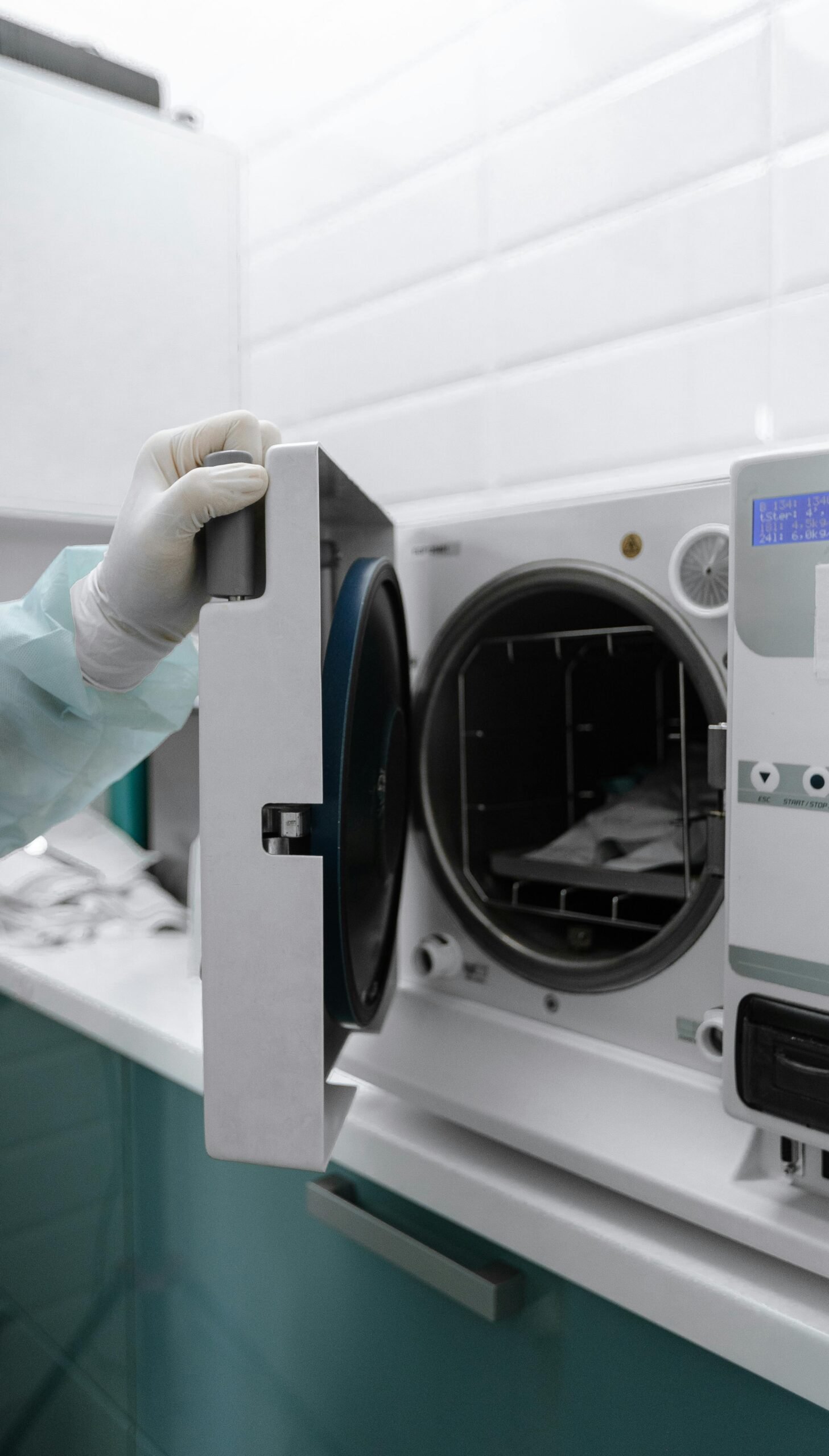
You know what keeps me up at night? It’s not the paperwork or the endless meetings—it’s thinking about what happens when sterilization goes wrong in a healthcare facility. I’ve walked through enough hospitals and clinics in Sri Lanka to know that the unsung hero sitting in your sterilization room is probably working overtime, and you might not even realize how critical it is until something goes sideways.
Let me tell you something: medical autoclaves aren’t just fancy pressure cookers for your surgical instruments. They’re your first line of defense against infections, your compliance lifeline, and honestly, one of the smartest investments you’ll ever make for your facility. Whether you’re running a bustling hospital in Colombo or a dental clinic in Kandy, understanding these workhorses can literally save lives—and your reputation.
So grab your tea, settle in, and let’s dive deep into everything you need to know about medical autoclaves. Trust me, by the end of this guide, you’ll be talking about pre-vacuum cycles and Bowie-Dick tests like a pro.
What Exactly Is a Medical Autoclave and How Does This Magic Box Work?
Insert image of a modern medical autoclave with open chamber showing internal components here
Alright, let’s start with the basics because I promise this is cooler than it sounds. A medical autoclave—also called a steam sterilizer medical device—is essentially a pressure chamber that uses saturated steam under pressure to annihilate microorganisms. We’re talking bacteria, viruses, fungi, spores—the whole rogues’ gallery of pathogens that have no business being on your surgical instruments.
Here’s how the magic happens: The autoclave creates an environment where steam at high pressure can reach temperatures way beyond boiling water’s measly 100°C. We’re typically talking 121°C to 134°C, which is hot enough to denature proteins and essentially cook those microscopic troublemakers into oblivion.
The process follows three critical phases:
- The Purge Phase – Air gets kicked out of the chamber (because air pockets are sterilization’s worst enemy)
- The Exposure Phase – Pressurized steam floods in and maintains contact with everything for a set time
- The Exhaust Phase – Pressure releases, steam evacuates, and your instruments come out sterile and ready
Think of it like a high-stakes sauna for your instruments, except instead of relaxation, they get molecular-level sanitization. Pretty neat, right?
What Can You Actually Sterilize in These Things?
Insert image of various medical instruments and materials arranged by sterilization compatibility here
This is where things get interesting, because not everything can handle the autoclave’s intense environment. I’ve seen too many facilities learn this the hard way—melted plastics, warped instruments, the works.
You CAN sterilize:
- Surgical instruments (scissors, forceps, scalpels—your bread and butter)
- Wrapped instrument trays (properly packaged in autoclave-safe materials)
- Lab glassware and containers
- Certain medical textiles (gowns, drapes, towels)
- Biohazardous waste (in designated medical waste autoclaves)
- Culture media and liquids (using liquid cycles—more on this later)
- Dental tools and burs
- Implantable devices (following manufacturer guidelines)
You CANNOT sterilize:
- Heat-sensitive electronics
- Most plastics (unless specifically rated for autoclaving)
- Sharp instruments that’ll dull under repeated exposure
- Oils and waterproof materials (steam can’t penetrate them)
- Anything with hollow spaces that trap air
Pro tip from my experience: Always check manufacturer specifications. That fancy endoscope might look autoclave-ready, but one wrong cycle and you’ve just created an expensive paperweight.
Decoding Cycle Times and Temperatures: The 121°C vs 134°C Showdown
Let me break down something that confuses a lot of people: autoclave sterilization cycles medical aren’t one-size-fits-all.
Standard Cycle Parameters:
| Temperature | Pressure | Typical Exposure Time | Best For |
|---|---|---|---|
| 121°C | 15 PSI (1 bar) | 15-30 minutes | General instruments, glassware, liquids |
| 134°C | 30 PSI (2 bar) | 3-10 minutes | Wrapped instruments, porous loads, prions |
Here’s what I’ve learned: The 121°C cycle is your workhorse for everyday sterilization. It’s gentler on instruments and perfect for unwrapped items. But when you need speed and you’re dealing with wrapped surgical packs or potentially tricky pathogens, the 134°C pre-vacuum cycle is your best friend.
The math is simple: Higher temperature = shorter time needed. It’s like choosing between slow-cooking and pressure-cooking your dinner, except the stakes are way higher.
Common Cycle Types You’ll Encounter:
Gravity Displacement Cycle: Steam enters at the top, pushes air out the bottom. Simple, reliable, but slower. Think of it as the reliable old sedan of sterilization.
Pre-Vacuum Cycle (Class B): Pulls air out first using a vacuum pump, then floods with steam. Faster, more thorough, and can handle wrapped and porous loads. This is your sports car—more expensive, but worth it for busy facilities.
Flash Sterilization: Super quick (3-10 minutes at 134°C) for unwrapped instruments in emergencies. Use sparingly—it’s your emergency lane, not your daily route.
House Steam vs Electric Boiler: What Powers Your Sterilization Workhorse?
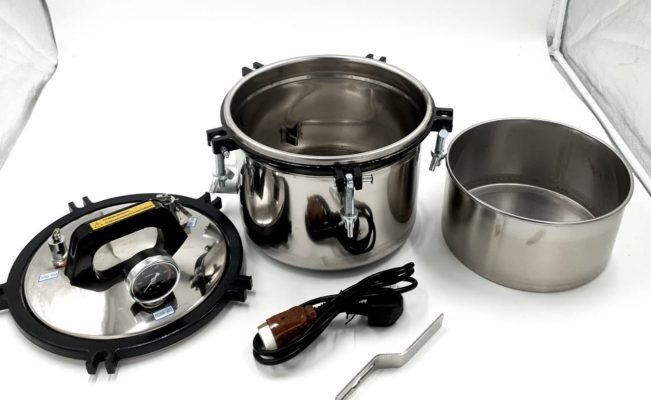
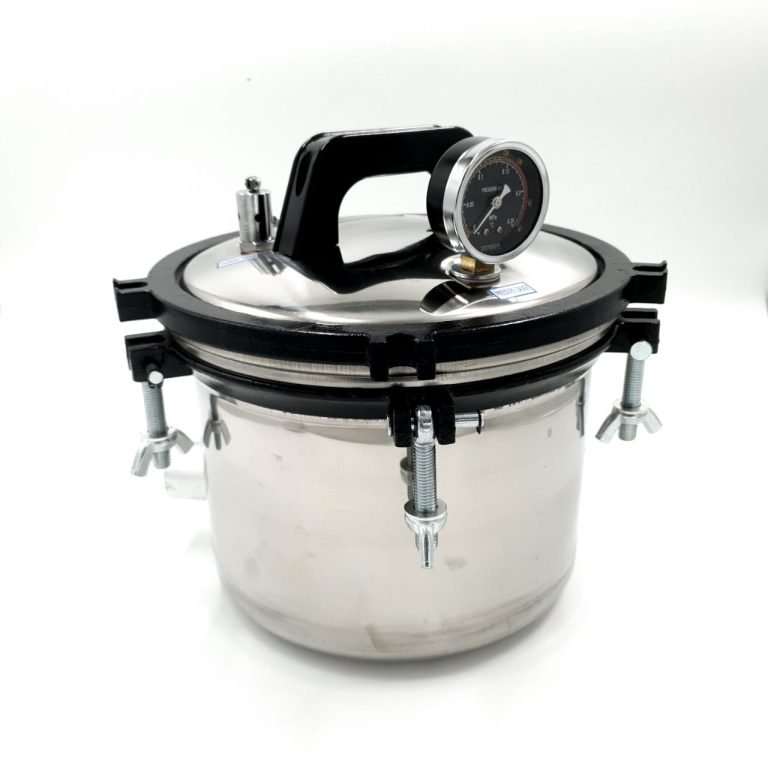
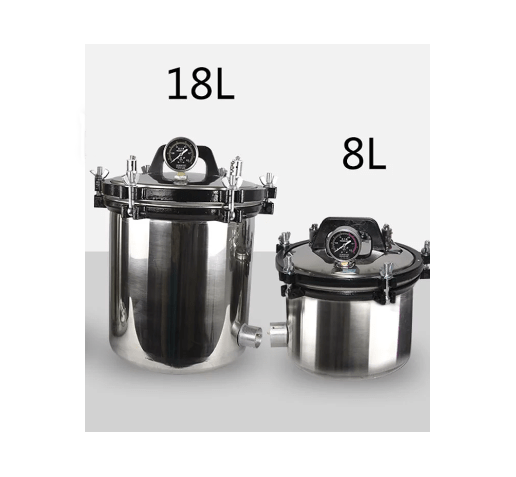
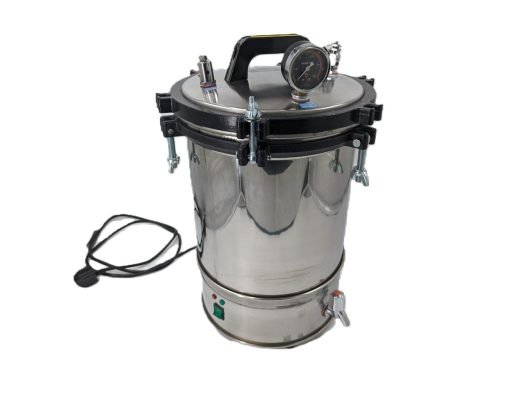
This is a decision that’ll impact your facility for years, so let’s talk real numbers and practicalities.
Electric Boiler Autoclaves:
These self-contained units generate their own steam using electric heating elements. For most clinics and smaller hospitals in Sri Lanka, this is the way to go.
Advantages:
- Plug-and-play installation (well, sort of—you still need proper electrical supply)
- Perfect for facilities without central steam
- Lower upfront infrastructure costs
- Easier to place anywhere with adequate power and drainage
Disadvantages:
- Longer heat-up times
- Higher operational electricity costs
- Chamber size limitations
House Steam Autoclaves:
These connect to your facility’s central steam supply—common in larger hospitals.
Advantages:
- Faster cycle times (steam’s already hot)
- Can handle massive loads
- Lower per-cycle operating costs at high volumes
Disadvantages:
- Requires existing steam infrastructure (expensive to install from scratch)
- Dependent on central plant reliability
- More complex installation and maintenance
My take? If you’re a small to medium clinic or dental practice, go electric. If you’re a 100+ bed hospital planning a new central sterile supply department (CSSD), house steam makes economic sense.
Floor Space Reality Check: Planning Your Autoclave’s Home
Let’s talk real estate, because I’ve seen too many facilities buy the perfect autoclave only to realize they have nowhere to put it.
Compact Benchtop Models:
- Footprint: 50-70cm wide × 50-60cm deep
- Examples: Midmark M9 UltraClave, SciCan Statim 5000 G4
- Perfect for: Small clinics, dental offices, research labs
Medium Floor Models:
- Footprint: 80-100cm wide × 70-90cm deep
- Examples: Tuttnauer 3870 ELV, Melag Vacuklav 44 B+
- Perfect for: Multi-specialty clinics, day surgery centers
Large Hospital Units:
- Footprint: 150-300cm wide × 100-150cm deep
- Examples: Getinge HS66/66L, STERIS AMSCO Evolution
- Perfect for: Hospital CSSDs, high-volume facilities
Don’t forget clearance space! You need:
- 30cm minimum on sides for ventilation and service access
- 50cm in front for door operation and loading
- Adequate ceiling height for steam venting
- Proper drainage access
I always tell facility managers: measure twice, buy once. And for heaven’s sake, consider future growth. That compact model might be perfect today, but what about when your practice doubles in two years?
Cycle Options: Pre-Vacuum vs Gravity Displacement Decoded
Insert diagram showing airflow patterns in pre-vacuum vs gravity displacement cycles here
This is where autoclave shopping gets technical, but stick with me—understanding this will save you from expensive mistakes.
Gravity Displacement Autoclaves:
Think of gravity displacement like opening a window at the top of a stuffy room—the fresh air naturally pushes the stale air down and out. Steam enters at the top, gravity pulls cooler air down and out through a drain at the bottom.
When it works great:
- Unwrapped solid instruments
- Glassware and simple containers
- Non-porous loads
- Budget-conscious facilities
When it struggles:
- Wrapped instrument packs (air pockets persist)
- Porous materials like textiles
- Complex instruments with lumens or crevices
- High-volume operations needing speed
Pre-Vacuum Autoclaves (Class B):
This is the premium option, and honestly, if you can afford it, it’s transformative. A vacuum pump actively sucks air out before steam enters—like using a vacuum cleaner to remove every speck of dust before you mop.
Benefits:
- Sterilizes wrapped and porous loads effectively
- Faster cycles (typically 3-10 minutes at 134°C)
- Better steam penetration
- Handles complex instrument geometries
- Includes drying cycle (your instruments come out actually dry!)
The catch:
- Higher purchase cost (roughly 40-60% more than gravity)
- More maintenance (vacuum pump needs servicing)
- Slightly higher operational costs
Fractional Pre-Vacuum (Class S):
A middle ground—multiple short vacuum pulses instead of one deep vacuum. Less effective than full Class B but better than gravity.
My recommendation? For hospitals and busy medical centers, Class B pre-vacuum is non-negotiable. For small clinics doing primarily unwrapped instruments, gravity displacement can work. For dental clinics wrapping instrument cassettes, invest in Class B—you’ll thank me later.
Compliance Maze: AAMI ST79, ANSI, and What It All Means for You
Insert image of compliance certification badges and standards logos here
Alright, let’s wade into the regulatory alphabet soup, because this matters more than you might think—especially if you’re seeking international accreditation or working with medical tourists.
AAMI ST79: The Gold Standard
The Association for the Advancement of Medical Instrumentation’s ST79 guideline is essentially the bible of hospital autoclave operation in healthcare. It covers:
- Cycle parameters and validation
- Quality assurance programs
- Biological and chemical indicator use
- Documentation requirements
- Preventive maintenance schedules
Why you should care: Many insurance providers and accreditation bodies require ST79 compliance. Plus, it’s just good practice—these guidelines exist because people way smarter than us studied what actually prevents infections.
ANSI/AAMI ST-8
This specifically addresses biological indicators—those little test vials that prove your autoclave actually works. ST-8 tells you:
- Which biological indicators to use for which cycles
- How often to test
- Proper incubation procedures
- Record-keeping requirements
EN 13060 (European Standard)
This defines those Class N, S, and B categories I mentioned earlier. If you’re buying European equipment (and many of the best autoclaves come from Europe), you’ll see these classifications.
ISO 17665
The international standard for moist heat sterilization. It’s broader than AAMI but covers similar territory.
Here’s my pragmatic advice: Buy autoclaves that explicitly state AAMI ST79 compliance. Look for built-in documentation features like printers or USB data logging—auditors love paperwork trail, and so will your medical director when JCI accreditation auditors come knocking.
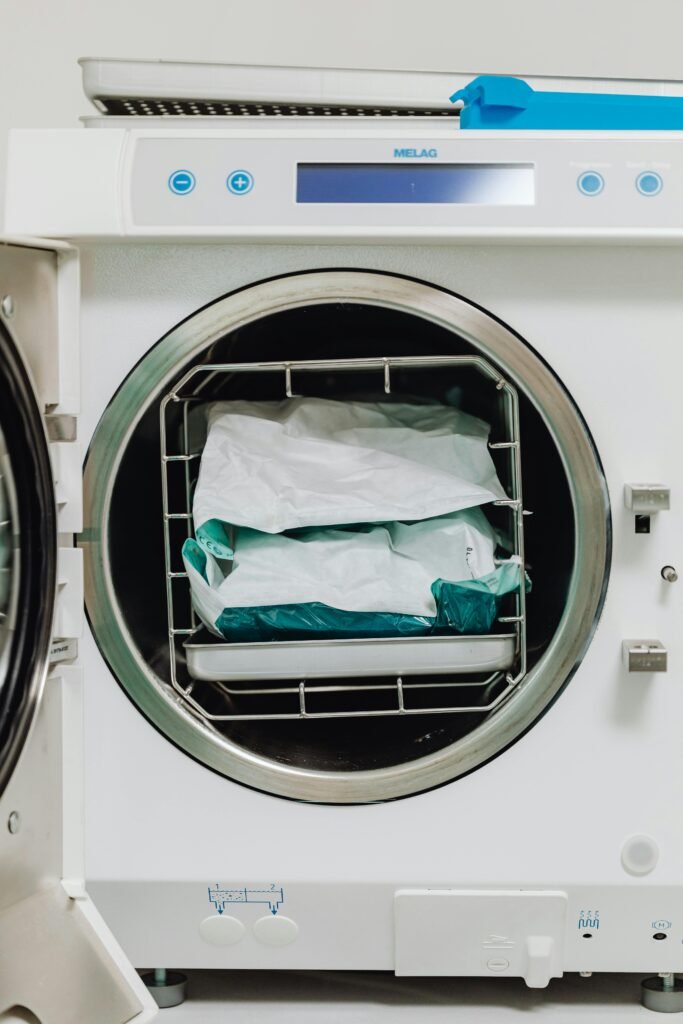
Validation and Monitoring: Proving Your Autoclave Actually Works
This is where theory meets reality. You can have the fanciest healthcare sterilizer on the planet, but if you’re not validating it properly, you’re flying blind.
The Three Levels of Monitoring:
1. Mechanical Monitoring (Every Cycle)
Your autoclave’s built-in gauges and sensors track:
- Temperature achieved
- Pressure maintained
- Cycle time completed
Modern units print or log this data automatically. If your autoclave doesn’t have a printer or digital logging, seriously consider upgrading—manual logs get “forgotten” way too often.
2. Chemical Indicators (Every Load)
These are those little strips or tabs that change color when exposed to sterilization conditions. Types include:
- Type 1 (Process Indicators): External tape that shows the pack went through an autoclave
- Type 4 (Multi-parameter): Internal indicators responding to time, temperature, and steam
- Type 5 (Integrators): Mimic actual biological kill curves
- Type 6 (Emulators): Specific cycle type indicators
Pro tip: Always use at least one internal chemical indicator inside wrapped packs. External tape only proves the outside got hot—it says nothing about steam penetration.
3. Biological Indicators (Weekly minimum, daily for implants)
These contain actual bacterial spores (usually Geobacillus stearothermophilus) that only die under proper sterilization conditions. After autoclaving, you incubate them:
- No growth = sterilization success
- Growth = you’ve got problems
I cannot stress this enough: Biological indicator testing is your proof that sterilization actually happened. Chemical indicators can give false positives, but bio indicators don’t lie.
Bowie-Dick Test for Pre-Vacuum Autoclaves
If you’ve got a pre-vacuum unit, you need to run this test daily before your first load. It checks whether your vacuum system is actually removing air. A failed Bowie-Dick test means none of your loads that day are reliably sterilized—scary stuff.
The test uses a special pack with a heat-sensitive sheet. After a test cycle, the sheet should show uniform color change. Streaks or patches mean air removal failed.
Maintenance: Love Your Autoclave and It’ll Love You Back
Let me share something I learned the hard way: medical autoclave maintenance isn’t optional. It’s the difference between 15 years of reliable service and 5 years of costly repairs.
Daily Maintenance Tasks:
- Wipe down the chamber – Remove debris and residue (mineral deposits are your enemy)
- Check door gasket – Look for cracks, brittleness, or compression marks
- Verify drain strainer is clear – Clogged drains cause cycle failures
- Run Bowie-Dick test (pre-vacuum units)
- Review cycle printouts – Catch parameter drifts early
Weekly Tasks:
- Run biological indicator test
- Deep clean chamber and door – Use autoclave-safe cleaning solution
- Check water reservoir levels (if applicable)
- Inspect steam trap
Monthly Tasks:
- Clean door gasket thoroughly – Lint and residue shorten gasket life
- Lubricate door mechanism – Follow manufacturer specs (wrong lubricant can contaminate chamber)
- Test safety valves
- Review all cycle records – Look for trends
Quarterly/Annual Tasks (Get Professional Service):
- Replace door gasket (annually or as needed)
- Calibrate temperature and pressure sensors
- Test over-pressure safety systems
- Descale chamber and heating elements
- Full validation testing
Water quality matters HUGELY. Sri Lanka’s water can be hard and mineral-rich depending on your area. If you’re in a high-mineral zone, consider:
- Installing a water softener or RO system for autoclave feed
- More frequent descaling
- Using distilled water (yes, it’s more expensive, but cheaper than replacing corroded components)
I’ve seen autoclaves in Colombo hospitals last 20+ years with religious maintenance, and I’ve seen units in clinics fail after 3 years due to neglect. The difference? A maintenance schedule and someone who actually follows it.
What Loads Can Your Autoclave Handle? The Practical Guide
Insert image of different load types properly arranged in autoclave chamber here
This question comes up constantly, so let’s get specific about what you can sterilize and how.
Wrapped Surgical Instruments (Class B Required)
Your surgical instrument autoclave needs proper loading:
- Use autoclave-grade wrap or pouches (not plastic bags!)
- Don’t pack too tightly—steam needs circulation
- Position instruments with hinges open
- Maximum pack size: 50cm × 30cm × 25cm for most cycles
- Include internal chemical indicator in each pack
Cycle recommendation: Pre-vacuum at 134°C for 4 minutes
Unwrapped Instruments (Flash Sterilization)
Only for emergencies when a wrapped, sterile instrument isn’t available:
- Place instruments in perforated tray
- Must use immediately—no storage
- Document why flash sterilization was necessary
Cycle recommendation: 134°C for 3 minutes (unwrapped)
My strong advice: Flash should be rare. If you’re flashing instruments daily, you don’t have enough instrument sets—fix the root problem.
Liquids and Media
Liquids are tricky because they can’t withstand rapid pressure changes (explosive boiling is real, folks).
- Use heat-resistant glass or autoclavable plastic containers
- Fill containers only 2/3 full (expansion room)
- Loosen caps but don’t remove (pressure equalization needed)
- Use liquid cycle with slow exhaust
- Let cool in chamber before removing (sudden pressure drop = eruption)
Cycle recommendation: 121°C for 15-20 minutes depending on volume
Biohazardous Waste (Dedicated Medical Waste Autoclave)
Waste sterilization before disposal is often legally required:
- Use autoclave-safe waste bags
- Don’t overfill bags (steam penetration issues)
- Include autoclave tape to verify process
- May require longer cycles and higher temperatures
Cycle recommendation: 134°C for 30-60 minutes (larger loads need longer times)
Important: Some facilities use dedicated medical waste autoclaves separate from instrument sterilizers to avoid cross-contamination concerns. If budget allows, I recommend this separation—it makes staff feel better and eliminates any contamination risk.
Porous Materials (Textiles, Drapes, Gowns)
Class B pre-vacuum is essential:
- Pack loosely in textile wraps
- Don’t mix with metal instruments (different heat absorption rates)
- Use extended drying phase (textiles hold moisture)
Cycle recommendation: 134°C for 7 minutes with extended dry
What About Hollow Instruments and Lumens?
Ah, the sterilization nightmare. Hollow instruments (tubing, certain surgical tools) require special attention:
- Pre-vacuum cycles are mandatory
- Position so lumens drain properly
- May need extended exposure times
- Consider specialized lumen indicators
Some manufacturers offer dedicated lumen adapters that ensure steam penetration—worth the investment if you frequently sterilize hollow instruments.
Utilities: The Unsexy but Critical Infrastructure Requirements
Nobody gets excited about plumbing and electrical specs, but get these wrong and your shiny new autoclave becomes an expensive doorstop.
Electrical Requirements:
Benchtop Electric Units (9-25L):
- 230V, single phase
- 15-20 amp dedicated circuit
- Proper grounding essential
Medium Units (50-100L):
- 230V or 400V three-phase
- 30-50 amp service
- May require electrical panel upgrade
Large Hospital Units (100L+):
- 400V three-phase standard
- 60-100+ amps
- Dedicated breaker and proper load calculation
Sri Lankan context: Our power supply can be unstable, especially outside Colombo. Consider:
- Voltage stabilizer or UPS for sensitive electronic controls
- Generator backup for critical facilities
- Power quality monitoring (voltage fluctuations damage heating elements)
Water Requirements:
Water Quality (this is huge):
- TDS (Total Dissolved Solids) < 50 ppm ideal
- pH 7.0-8.0
- Low chloride content (chlorides corrode stainless steel)
- Minimal hardness (calcium/magnesium cause scaling)
Water Consumption:
- Benchtop units: 2-5 liters per cycle
- Medium units: 10-20 liters per cycle
- Large units: 30-100+ liters per cycle
Consider:
- Reverse osmosis system for autoclave feed water
- Adequate pressure (typically 2-4 bar/30-60 PSI)
- Drainage capacity (hot water discharge)
Drainage Requirements:
- 1-2 inch drain line minimum
- Must handle hot water (60-100°C)
- Proper air gap to prevent backflow
- Adequate slope for gravity drainage
Pro tip: In Sri Lankan climate, verify your drain lines won’t create condensation issues. I’ve seen moisture problems damage adjacent walls and equipment.
Ventilation:
Autoclaves generate heat and humidity. Requirements:
- Minimum 10 air changes per hour in autoclave room
- Exhaust ventilation preferred (removes steam and heat)
- Air conditioning helps but isn’t sterilizer-rated air
- Keep autoclave away from heat-sensitive equipment
Calculate room cooling load including autoclave heat output—failing to do this results in uncomfortably hot sterilization rooms and staff who avoid the space.
Choosing the Right Medical Autoclave: The 2026 Buyer’s Guide
Insert comparison table of top autoclave models here
With hundreds of models available, how do you choose? Here’s my framework based on years of helping Sri Lankan facilities make smart purchases.
For Small Dental Clinics (1-3 Chairs):
Top Pick: Melag Vacuklav 44 B+
- 17L Class B capacity
- Perfect for wrapped cassettes
- Touchscreen interface
- Traceability software included
- Price range: €4,000-6,000
Budget Alternative: Runyes Feng 23L
- 23L Class B
- Vacuum and drying cycles
- More affordable Chinese manufacturing
- Price range: $2,500-3,500
Why these work: Dental practices wrap instrument cassettes, so Class B is essential. These sizes handle a full day’s work without being oversized.
For Medical Clinics (5-20 Patient Appointments/Day):
Top Pick: Midmark M9 UltraClave
- Compact automatic operation
- 9-inch chamber (perfect for basic instrument trays)
- Three preset cycles
- Proven reliability in small practices
- Price range: $6,000-8,000
Step-Up Option: SciCan Statim 5000 G4
- Cassette-style for ultra-fast turnaround
- 6-minute cycles (perfect for busy clinics)
- Gentle on delicate instruments
- Price range: $7,000-10,000
Why these work: Clinic workflows need quick turnaround. These models balance speed, capacity, and footprint.
For Multi-Specialty Clinics and Day Surgery Centers:
Top Pick: Tuttnauer 3870 ELV
- 85L chamber (handles significant volume)
- Pre-vacuum with drying
- Printer included for documentation
- Hospital-grade reliability
- Price range: $15,000-20,000
Alternative: STERIS AMSCO Evolution Series
- 100-300L options
- Advanced data logging
- Modular configuration
- Validation support
- Price range: $25,000-50,000+
Why these work: You need hospital-grade performance with capacity for surgical instrument sets, but don’t need massive CSSD throughput.
For Hospitals (100+ Beds, Central Sterile):
Top Pick: Getinge HS66/66L
- Horizontal passthrough design
- High throughput capacity
- Modular for future expansion
- Full validation and qualification
- Price range: $75,000-150,000
Alternative: Belimed GS 600
- Eco-friendly design (lower water/energy use)
- Efficient for high-volume operations
- Excellent service network
- Price range: $60,000-120,000
Why these work: Hospital CSSDs run multiple cycles hourly. These industrial workhorses deliver reliability at scale with proper documentation for accreditation.
For Research Labs and Specialized Applications:
Top Pick: Priorclave TACTROL3 Benchtop
- 35L capacity
- Programmable custom cycles
- Media prep cycles available
- Research-grade flexibility
- Price range: $8,000-12,000
Why it works: Labs often need specialized cycle parameters for media, liquids, and non-standard loads.
Troubleshooting Common Autoclave Problems
Insert flowchart of common autoclave troubleshooting steps here
Let’s talk about the problems that’ll inevitably pop up, because even the best autoclaves have bad days.
Problem: Cycle Won’t Start
Possible causes:
- Door not properly closed (check gasket seating)
- Water level low (check reservoir/feed)
- Previous cycle error not cleared
- Emergency stop engaged
Quick fixes:
- Clean and reseat door gasket
- Refill water supply
- Clear error codes and restart
- Check emergency stop button
Problem: Cycle Fails to Reach Temperature
Possible causes:
- Heating element failure
- Thermostat malfunction
- Air pockets preventing steam contact
- Insufficient steam pressure (house steam units)
What to do:
- Check temperature sensor calibration
- Verify heating element resistance
- Ensure proper air removal in pre-vacuum cycles
- Call service—electrical components need professional repair
Problem: Items Come Out Wet
Possible causes:
- Insufficient drying time
- Overloading chamber
- Porous materials packed too densely
- Drying system malfunction
Solutions:
- Extend drying phase
- Reduce load size
- Repackage textiles more loosely
- Check vacuum pump function (pre-vacuum units)
Fun fact: Moisture on sterilized items can wick bacteria through wrap—wet packs are contaminated packs. Don’t use them.
Problem: Chamber Has Brown/White Deposits
Causes:
- Mineral buildup from hard water (white)
- Iron oxidation from water impurities (brown)
- Chemical residue from instruments
Solutions:
- Descale with autoclave cleaner (follow manufacturer protocol)
- Improve water quality (RO or softener)
- Rinse instruments before autoclaving
- More frequent chamber cleaning
Problem: Biological Indicator Test Failed
This is serious—stop using the autoclave immediately.
Possible causes:
- Temperature not reaching setpoint
- Insufficient exposure time
- Air pockets in load
- Autoclave malfunction
Required actions:
- Tag autoclave “out of service”
- Recall all items processed since last successful BI test
- Re-sterilize everything
- Contact service for validation
- Document incident and corrective actions
Never skip this step. Failed BI tests mean patients are at risk.
Problem: Strange Noises During Cycle
Knocking/Banging:
- Steam trap malfunction
- Water hammer in supply lines
- Loose internal components
Hissing/Whistling:
- Leaking door gasket
- Valve seats worn
- Safety valve lifting prematurely
Grinding:
- Vacuum pump issues (pre-vacuum units)
- Bearing wear in fan/motor
What to do: Strange noises rarely fix themselves. Schedule service before minor issues become major failures.
The Future of Medical Sterilization: What’s Coming in 2026 and Beyond
We’re living in exciting times for sterilization technology. Here’s what’s emerging:
Smart Autoclaves with IoT Connectivity
Modern units now feature:
- Cloud-based cycle logging
- Remote monitoring and alerts
- Predictive maintenance (AI predicts failures before they happen)
- Integration with facility management systems
The W&H Lisa and Melag Connect systems are leading this trend—imagine getting a text alert that your autoclave needs service before it actually breaks down.
Eco-Friendly Designs
With increasing focus on sustainability:
- Lower water consumption (some models use 50% less)
- Improved energy efficiency
- Heat recovery systems
- Reduced chemical usage
The Belimed GS 600 exemplifies this trend with impressive resource efficiency.
Enhanced Traceability
Regulatory pressure is driving:
- Individual instrument tracking with RFID
- Barcode integration for pack tracking
- Complete digital audit trails
- Integration with electronic health records
For facilities serving international patients or seeking international accreditation, traceability is becoming non-negotiable.
Faster Cycle Times
Technology improvements are enabling:
- Sub-5-minute pre-vacuum cycles
- Flash sterilization with better documentation
- Faster heat-up and cool-down
The SciCan Statim series shows what’s possible—6-minute complete cycles for routine loads.
Making Your Purchase Decision: Final Considerations for Sri Lankan Facilities
Insert image of decision matrix comparing autoclave features here
Before you write that check, consider these Sri Lankan-specific factors:
Local Service and Support
Critical question: Who services this brand locally?
I’ve seen facilities buy European-brand autoclaves at great prices, then wait 6 months for parts from overseas. Ask:
- Is there an authorized service center in Sri Lanka?
- What’s the average repair response time?
- Are common spare parts stocked locally?
- What’s the warranty coverage?
Brands with good Sri Lankan presence: Tuttnauer, Midmark, and some Chinese brands have better local support than niche European manufacturers.
Import Duties and Currency Fluctuations
Medical equipment imports can get expensive with:
- Import duties (check current rates—they change)
- VAT and other taxes
- Shipping and handling
- Currency exchange volatility
Pro tip: Get total landed cost quotes in LKR, not just FOB prices in USD or EUR. The difference can be 40-60% of base price.
Training and Documentation
Ensure you get:
- On-site installation and training
- Operating manuals in English
- Maintenance schedules
- Validation documentation
- Ongoing technical support
Capacity Planning
Think three years ahead:
- Will your practice volume grow?
- Are you adding procedures/specialties?
- What’s your instrument turnover rate?
Undersizing wastes time with constant cycling. Oversizing wastes money and space. Get it right.
Total Cost of Ownership
Look beyond purchase price:
Annual operating costs include:
- Electricity (can be substantial for electric units)
- Water and treatment
- Chemical indicators ($500-2,000/year)
- Biological indicators ($300-1,000/year)
- Service contracts ($1,000-5,000/year)
- Spare parts and repairs
- Descaling supplies
A cheaper autoclave with high operating costs can cost more over 10 years than a pricier but efficient model.
Wrapping It Up: Your Path to Sterilization Excellence
Listen, I know this was a lot of information. Medical autoclaves aren’t simple, and they shouldn’t be—they’re literally life-and-death equipment. But here’s the beautiful thing: get this right, and you’ve built a foundation of safety and quality that everything else in your facility rests on.
Whether you’re setting up a new clinic in Galle, upgrading your hospital’s CSSD in Colombo, or finally replacing that temperamental autoclave in your dental practice in Kandy, the principles remain the same:
Buy for your real needs (not aspirations or salespeople’s suggestions), prioritize reliability and service over features you’ll never use, invest in proper validation and monitoring (biological indicators aren’t optional), maintain religiously (calendars and checklists are your friends), and train your staff thoroughly (the best autoclave is only as good as its operator).
The landscape of medical sterilization in Sri Lanka is evolving. International standards are becoming table stakes, patients are more informed, and accreditation bodies are watching. Your autoclave choice today impacts your reputation, compliance status, and patient safety for the next decade or more.
So take your time. Ask questions. Demand demonstrations. Check references from other Sri Lankan facilities using the same model. And remember: the most expensive autoclave isn’t necessarily the best one for you—the best one is the one that reliably sterilizes your actual loads, fits your space and budget, and comes with support you can count on when things go wrong (and eventually, something will).
Now get out there and make a smart choice. Your patients, your staff, and your future self will thank you.
Ready to upgrade your sterilization game? Start by auditing your current process—are you really running biological indicators weekly? When was your last door gasket replaced? What does your maintenance log look like? Fix what’s broken, optimize what works, and plan your next step from a position of knowledge.
And hey, if you found this guide helpful, share it with your colleagues in healthcare. We’re all in this together, trying to keep our patients safe and our facilities running smoothly. Here’s to sterile instruments and peace of mind!